
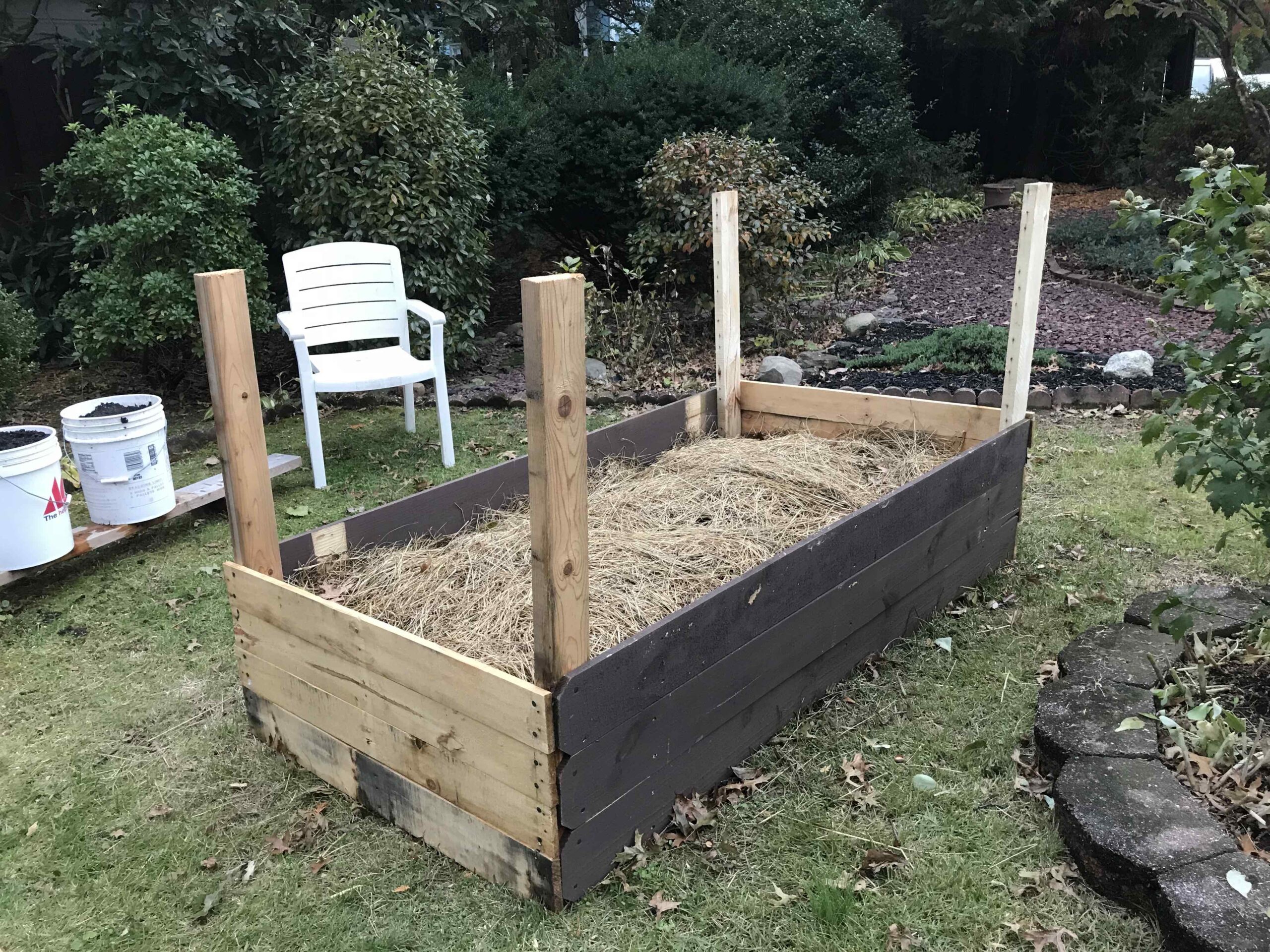
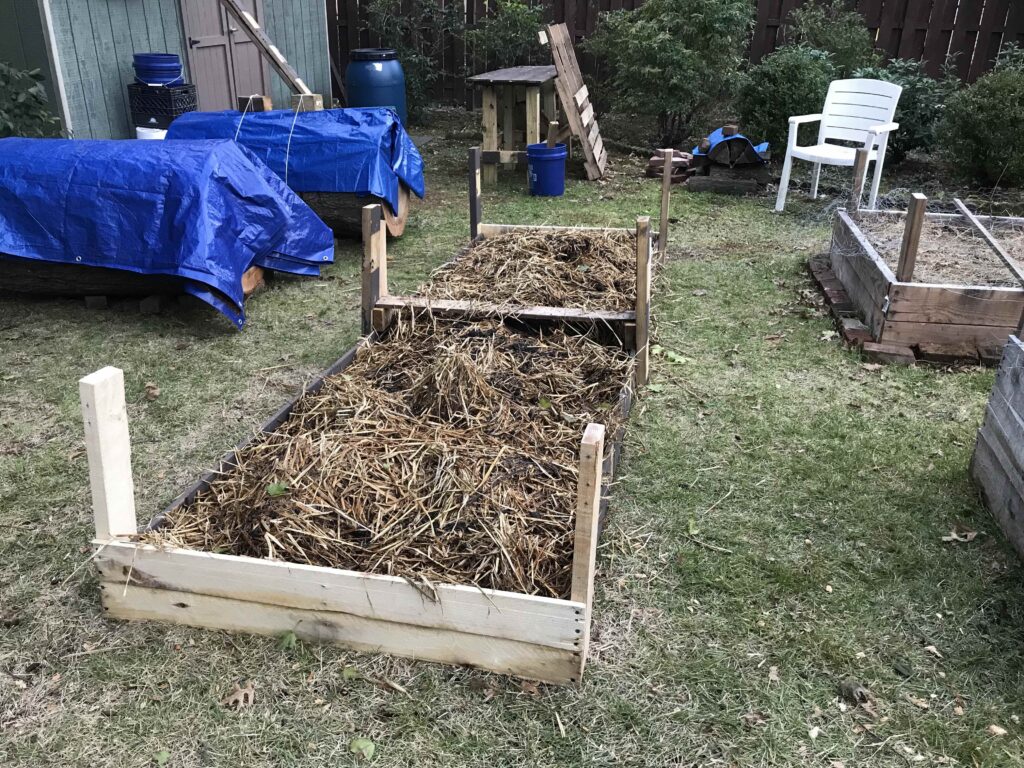
In our backyard, I use raised beds and pots for my gardening needs. I use raised beds because of the organizational part of it and because I have better control of the soil. No one has ever stepped inside my raised beds. Each bed is no wider than 4 feet, and that makes it easy for you to reach inside the bed. You will find the dirt in the beds to be very fluffy and full of earthworms, and you need the earthworms to aerate the soil. I have ten raised beds in our backyard, and they function very well for our gardening needs.
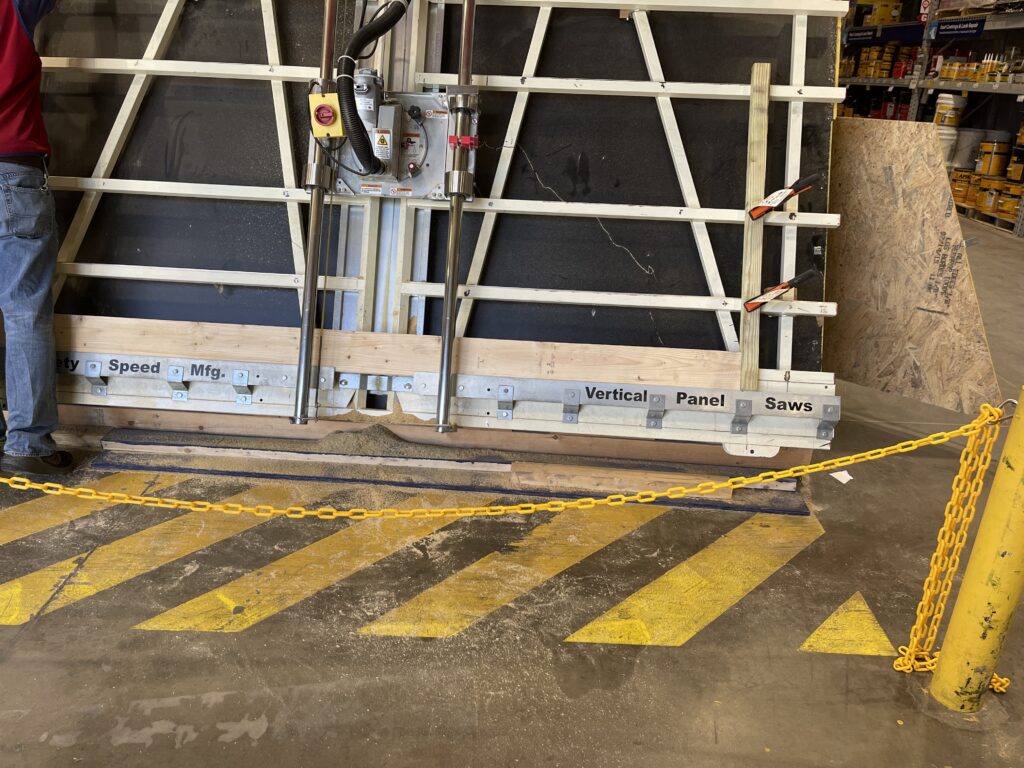
One easy way to build your beds is to use a local lumberyard or a big-box store where you can buy the lumber and they will cut it for you to fit your raised bed design needs. Cool!
The image below shows the machine they use to cut the lumber to your specifications. So, let’s say that you want to make a 4′ x 4′ bed, but they don’t sell lumber of such length. So, you can buy lumber that is eight feet long and have them cut it in half. Easy peasy! I find it more cost-effective to buy lumber that is shorter than 12 feet. Anything longer than 8 feet tends to be more expensive.
The picture below shows the specialized cutting tool used at Lowe’s. The lumber is placed on that vertical contraption, and the saw is mounted on two vertical rails that allow it to move smoothly and make precise cuts.
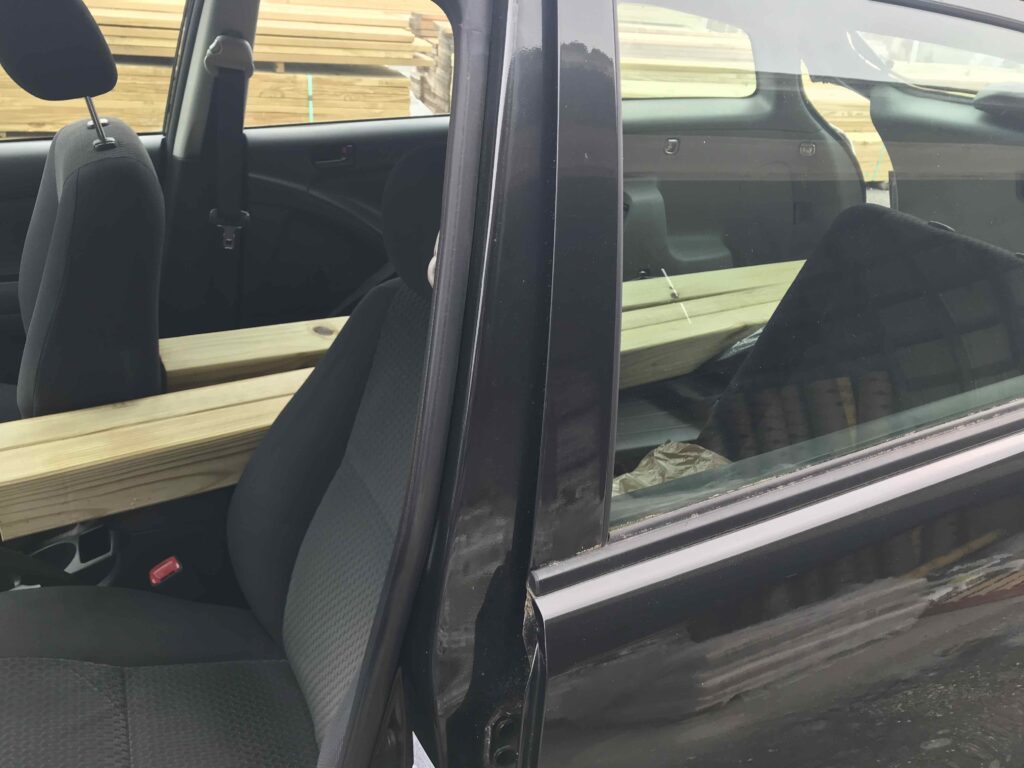
Below you can see several pieces of lumber stacked in our Toyota Matrix.
Below is an example of a simple 4′ x 4′ bed made with 2 by 4s. This is my herb raised bed. Since woodchucks and rabbits are frequent visitors to my garden, I surround each raised bed with protective netting supported by vertical 2×4 posts. It may not be the most elegant solution, but it does a good job of keeping these hungry critters at bay.

Top Advantages of Raised Beds.
- Total Soil Control: You control the quality of your growing medium.
- Better Drainage: Elevating the soil keeps roots from sitting in standing water during heavy spring rains.
- Fewer Weeds: especially since I use the Ruth Stout method of deep mulching.
- Easier Accessibility: Raising the bed reduces the physical strain of stooping and kneeling while planting, weeding, and harvesting. I am 71 years young and accessibility is a concern of mine.
- Pest Deterrence: The physical barrier makes it more difficult for rabbits or pets to trample or eat your plants.
The optimum width for a raised bed is 4 feet. Most gardeners can comfortably reach about 2 feet into the bed from either side, allowing easy access to all of the plants without having to step into the growing area. If a bed is wider than 4 feet, reaching the plants in the center can become difficult, making routine tasks such as planting, weeding, pruning, and harvesting much less convenient.
One of the fundamental principles of raised-bed gardening is to never step inside the bed. While it may seem harmless, foot traffic compacts the soil, reducing air pockets and making it harder for roots to grow and thrive. Loose, well-aerated soil is one of the primary advantages of raised-bed gardening, so preserving that soil structure is essential. Although it’s not always written down, avoiding the temptation to step into a raised bed is one of the unwritten rules that experienced gardeners follow religiously.
Creating a raised bed that is less than 4 feet is not a problem.
Most of my raised beds are 12 inches high and I find this height sufficient for gardening.
I do NOT use pressure treated wood.
In the past, I usually secured the corners of my raised beds with screws, and that method worked well enough. This year, however, I decided to use corner blocks made of concrete, and I couldn’t be happier with the results. Not only did they make the construction of each bed faster and easier, but they also gave the finished beds a much cleaner and more attractive appearance.
Another advantage is their flexibility. If you ever decide to relocate a bed, change its dimensions, or replace a board that has begun to rot, the corner blocks make the process incredibly simple. Instead of disassembling an entire bed and dealing with a collection of screws, you can quickly swap out individual components and have the bed back in service in no time. For anyone building raised beds, they’re a practical upgrade that combines convenience, durability, and a polished look.
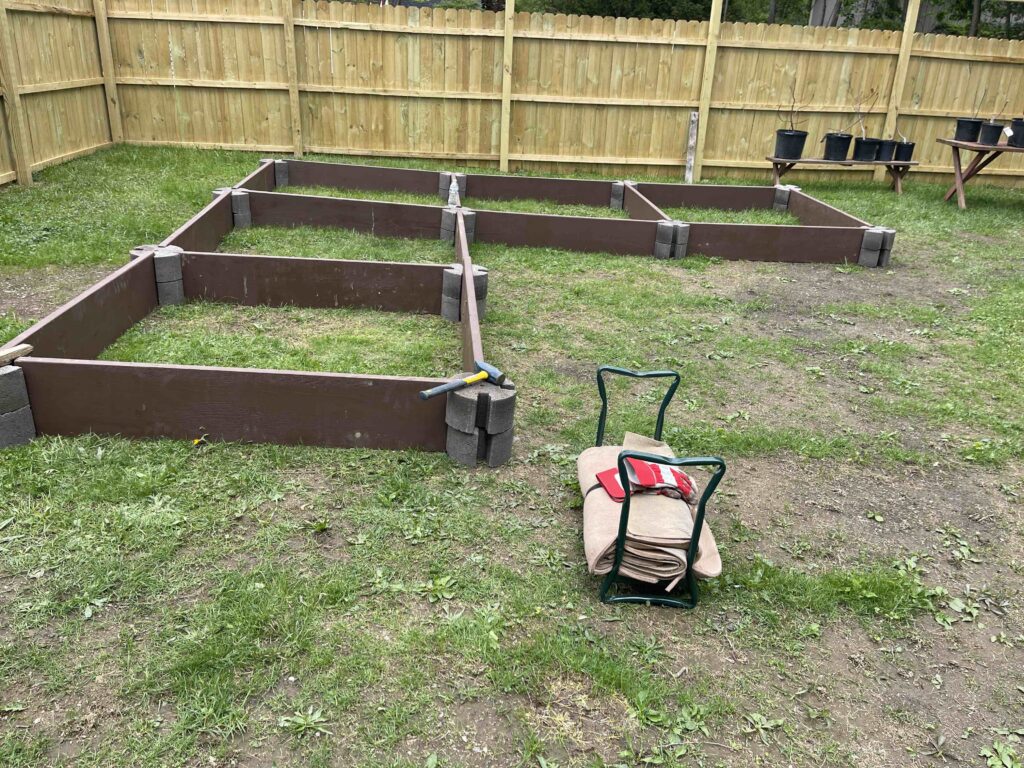
In the picture above you can see that the ground is not perfectly level, but I did not have any problem with their construction. Phew!
To line the bottom of each raised bed, I laid down a single layer of flattened shipping boxes. The cardboard helps suppress weeds, eventually breaks down, and adds a little organic matter to the soil. Once the cardboard was in place, I filled each bed with compost-rich soil from my own compost pile. Sweet!
When you stop and calculate how much soil it takes to fill a raised bed, the numbers can be a bit mind-boggling. Most bags of garden soil contain slightly less than one cubic foot of material. To fill just one of these beds, I would need approximately 25 bags because each bed is 5 feet wide by 5 feet long. I recently saw a sale offering five bags for $10, which sounds like a bargain until you realize that filling a single bed would still cost about $50 in soil alone.
And that’s before you consider the logistics. How many bags can your vehicle safely carry? How many trips will you have to make? Then there’s the fun of loading, unloading, and hauling 25 bags from your car to the garden. As for me, after having a double hernia repaired, I’ve become much less enthusiastic about lifting heavy objects. But let’s not go down that road right now.
Needless to say, having access to my own compost pile gave me beautiful soil and saved me a considerable amount of money, effort, and wear and tear on both my vehicle and my back.