
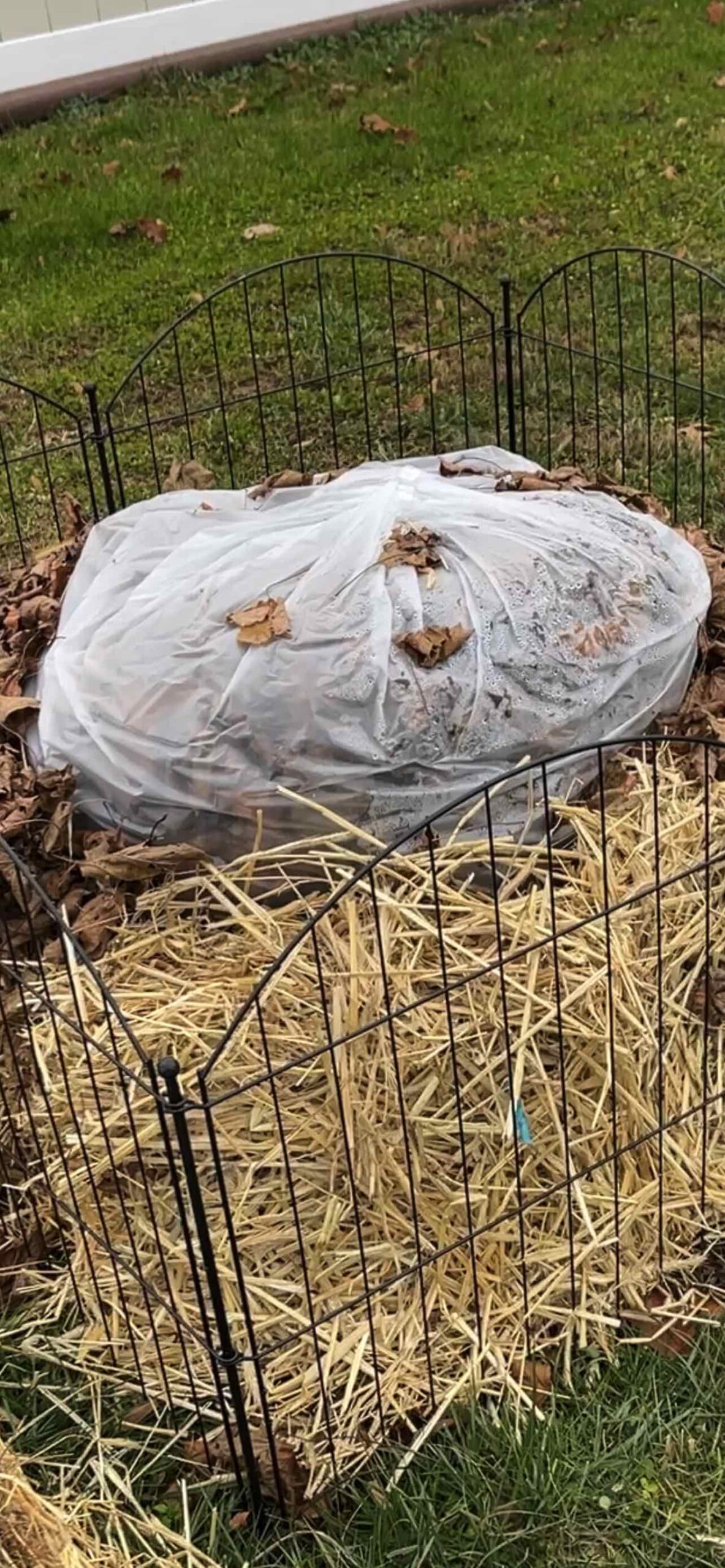
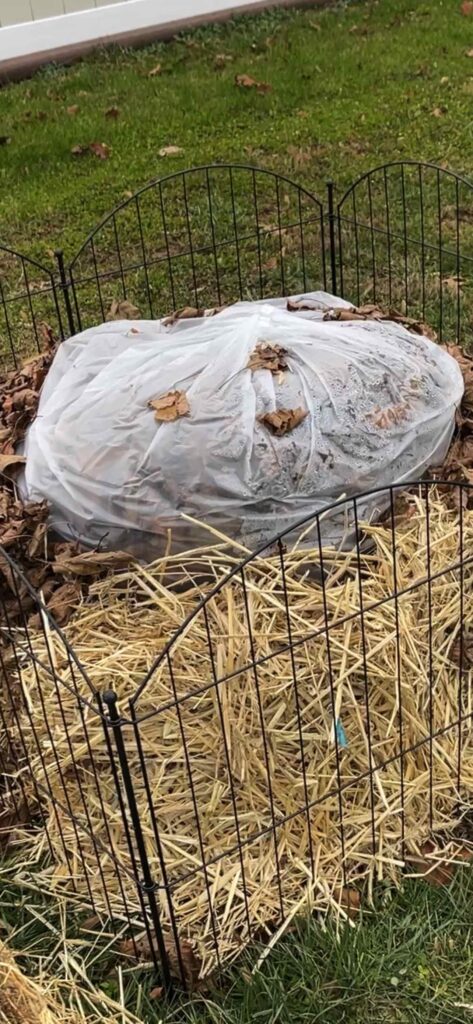
Under that plastic bag is a pruned Italian Honey (also known as Lattarulla) fig tree, all tucked in for winter. I filled the bag with dry leaves gathered from the property—every single one checked to make sure there wasn’t a trace of moisture. They were perfectly crisp and dry, just what I wanted.
My plan was to tie it all up, then add a full bale of straw over the top for extra insulation. I walked back to the car to grab some twine, stopped to chat with the owner all no more than five minutes. When I returned and looked at the top of the bag, I was stunned.
Water droplets. Everywhere! Oh my!
Even though everything went in completely dry, condensation had already begun to form on the inside of the plastic. This is exactly what makes plastic covers tricky for fig winterization. Moisture gets trapped, and when it has nowhere to go, mold forms, branches start to deteriorate, and the tree branches will most likely rot.
Fig trees are resilient, so this one will probably sprout new branches from the roots in the spring, but most likely, those branches won’t have enough time to grow and ripen fruit.
To fix the problem, I punctured several holes in the plastic bag to allow air circulation and help the trapped moisture escape.
Lesson learned: When winterizing figs, insulation is important, but ventilation is essential.
If you’d like to reach out to me privately, please use the contact form on this site.
Subscribe to receive blog updates by email.
Stay tuned, keep on rootin’ and happy growing!
Leave a Reply