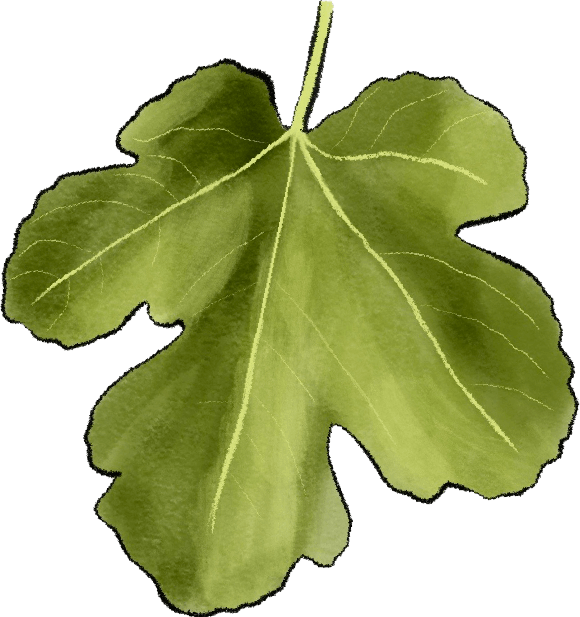
The two Smith fig cuttings, recently purchased on January 22nd, arrived in good shape, though they were unfortunately frozen. I carefully washed and gently scrubbed them with water and a bit of dishwashing soap. Then, I lightly scored the bottom of the cuttings and placed them together in a transparent cup filled with plain water to begin the rooting process. It’s always a bit of anticipation at this stage, quiet, hopeful, and full of potential.
Smith fig trees are known for their large, deeply lobed leaves and their adaptability in USDA zones 7–10. Since I’m gardening in zone 6b, these two figs will live their lives in containers, allowing me to protect them from colder conditions and give them the warmth they need to thrive.
The fruit itself is one of the reasons Smith figs are so cherished. They produce medium to large figs with closed eyes, making them well-suited to humid conditions. The skin ripens to a brown-to-bronze hue with subtle purple tones, while the interior pulp ranges from amber to light strawberry. The flavor is sweet and rich, carrying gentle berry notes but not overly sugary, but beautifully balanced.
With patience, proper care, and a bit of luck, I’ll likely be enjoying my first homegrown Smith fig in the summer of 2027, a long wait, but one that promises to be well worth it, assuming all stays healthy along the way.
All in good health, of course. I’m not going to sell these two fig trees though, I’ll put them to stud (a reference from Godfather I) and harvest many, many cuttings.
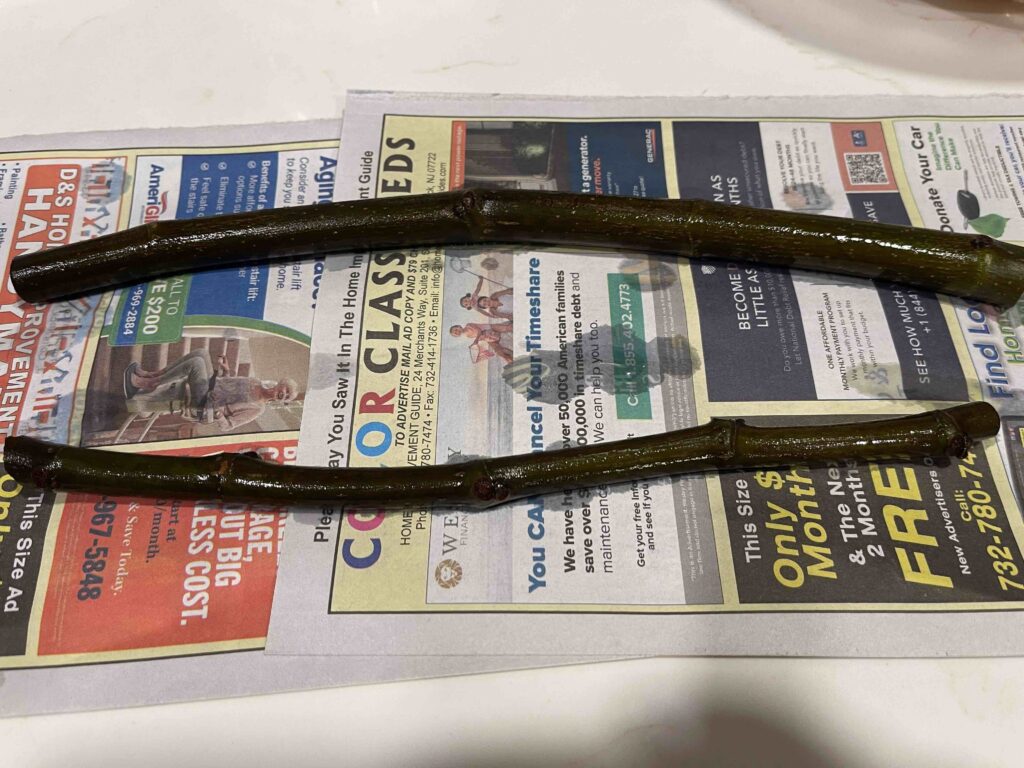
When you prune a tree, it’s often said that you should seal the wound to protect it from future damage. While there are certain pruning cuts that, given time, will heal themselves naturally, many gardeners still believe in giving the tree a little extra help.
I remember the 1960s vividly, when we lived in a suburb of Athens, Greece. My godfather would come to visit, and one of his quiet rituals was pruning the two orange trees and two lemon trees in our backyard. He worked carefully, deliberately, and after each cut he would reach for a small tin of some type of special red paint he always brought with him. With a steady hand, he would coat the fresh wound, as if bandaging it, convinced it would keep the tree strong and safe.
Now, more than sixty years later, I find myself doing much the same thing with my own cuttings. It’s partly habit, partly memory, but it also has its practical side. Sealing the cut helps prevent moisture loss, keeping the cutting from drying out and giving it a better chance to thrive. In a way, it feels like carrying forward an old lesson: sometimes tradition and care matter just as much as technique. You can find these special paints year round at any gardening store for about $10.
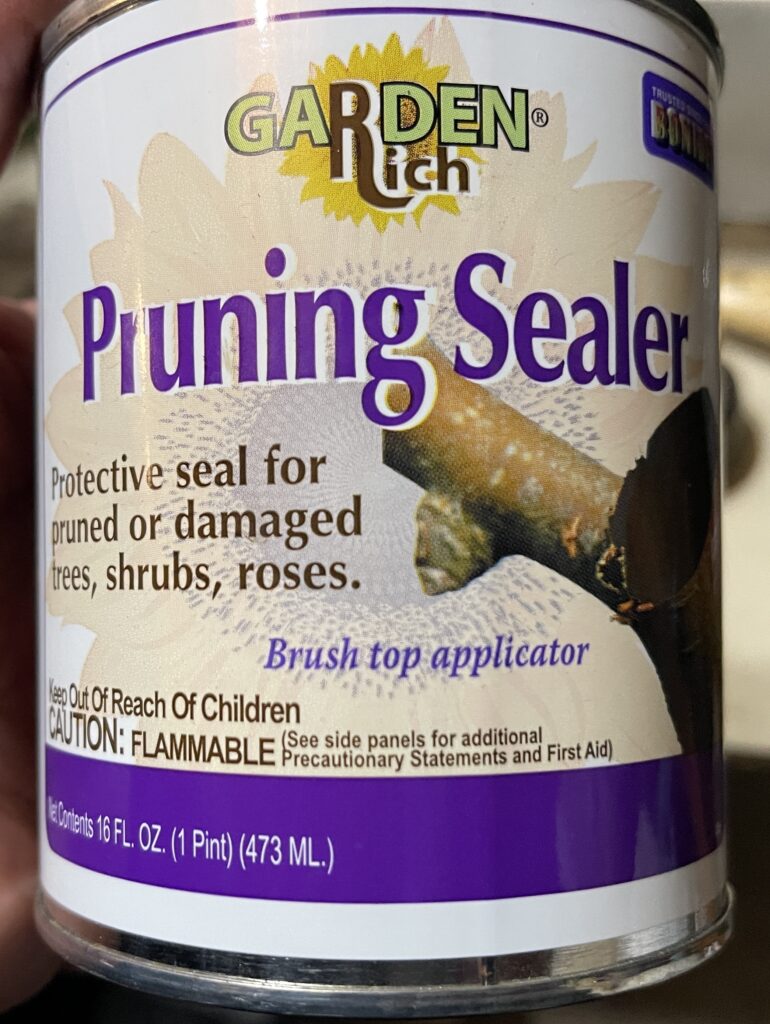
Fast forward two weeks later, here is an update on my recent purchase of two Smith fig cuttings.
To start, I sealed the top cuts with the special paint I purchased about 12 days ago. At first, I was a little worried because after I received them the cuttings felt very cold and I feared the worst. Thankfully, it seems that chill didn’t do them in after all.
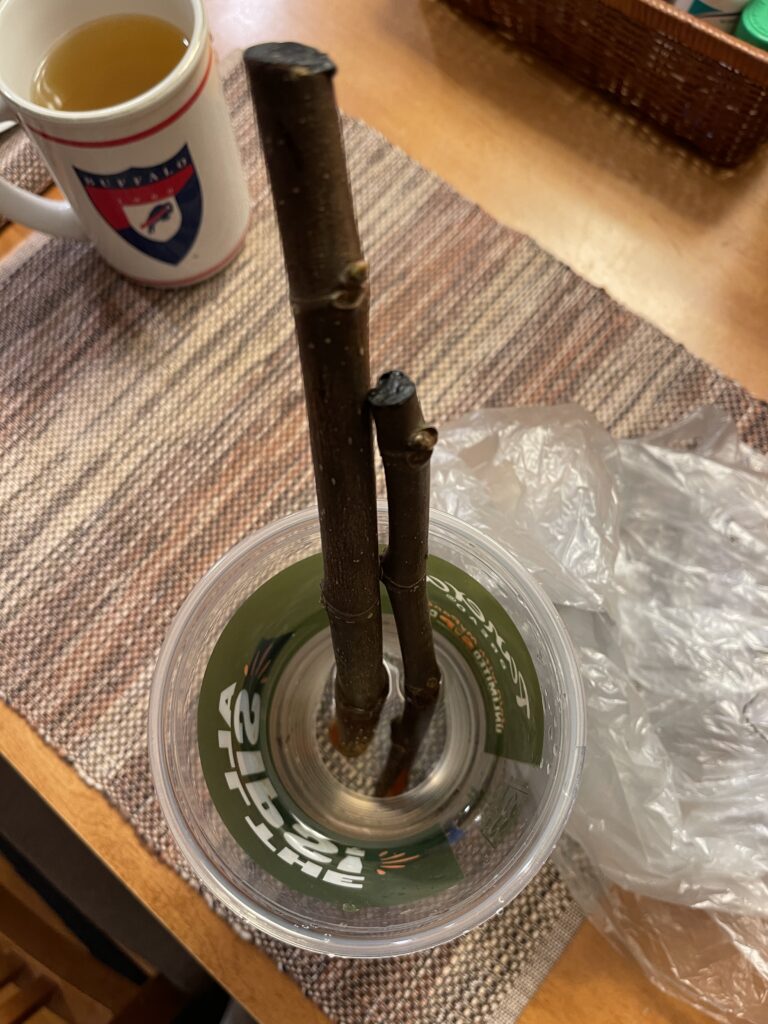
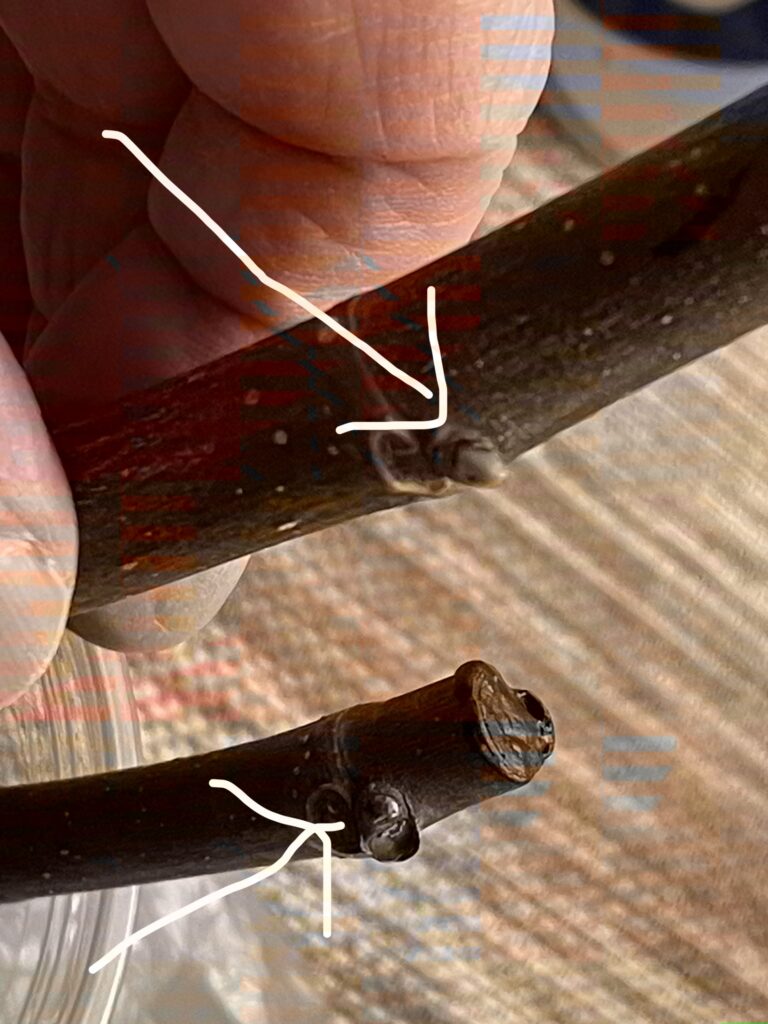
I’ve been changing the water daily and keeping them nice and warm. While I don’t have a camera with a good zoom lens, my iPhone has been doing a surprisingly good job capturing the progress.
I hope you can spot the sweet little bumps forming there, it’s such a relief (and a thrill!) to see signs of life.
I also keep the cup with both cuttings covered with a plastic baggie 24/7 to maintain humidity. If all continues to go well, I’m hoping to move the two cuttings into a better home in a couple of weeks.
All in good health!
If you’d like to reach out to me privately, please use the contact form on this site.
Subscribe to receive blog updates by email.
Stay tuned, keep on rootin’ and happy growing!
Leave a Reply