Fig Propagation Using Cuttings
Fig propagation through cuttings is a technique embraced by many fig enthusiasts, and I feel compelled to share this post especially for those new to the process.
Personally, I prefer taking cuttings from dormant fig trees, selecting branches that are brown and woody—not green. To explain: if a fig branch begins growing a month or two before the tree enters dormancy, that newer growth is still considered “green” due to its color and lack of lignification. In contrast, early-season growth tends to be brown and hardened. Often, you’ll notice that the tips of branches remain green, even late in the season.
Why Lignified Dormant Cuttings Are Preferred
- Resilience
Lignified (hardened) wood is far more resistant to cell damage, particularly from freezing temperatures, making it ideal for storage and transport. - Longer Storage Life
These cuttings can be stored for extended periods—up to six months—in a cool environment such as a refrigerator. This flexibility allows for propagation at a more convenient time. - Easier Rooting
Although green cuttings can root too, lignified dormant cuttings are generally more forgiving and easier to handle, especially for beginners.
But What About Green Cuttings?
Green cuttings are still a viable option and can produce excellent results under the right conditions.
They can root successfully: With proper care, especially using a misting system, green, unhardened cuttings taken during the summer can establish roots effectively.
Dormancy doesn’t guarantee lignification: Not all parts of a dormant fig branch are fully lignified. Upper sections of the branch may still retain green characteristics even during dormancy.
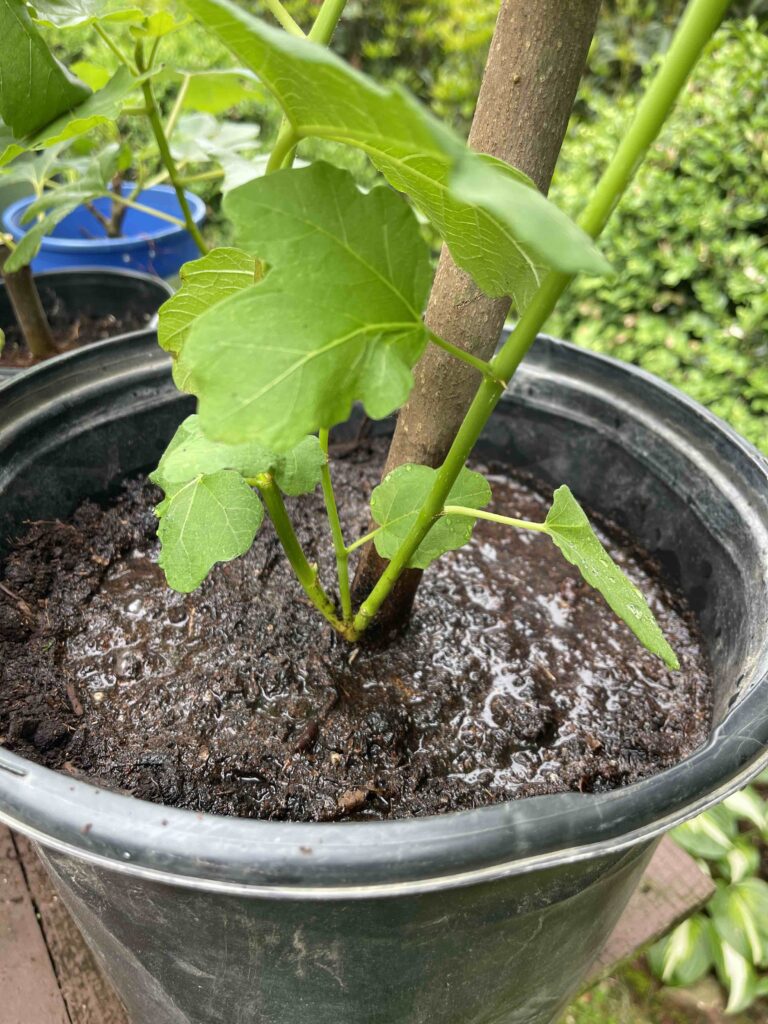
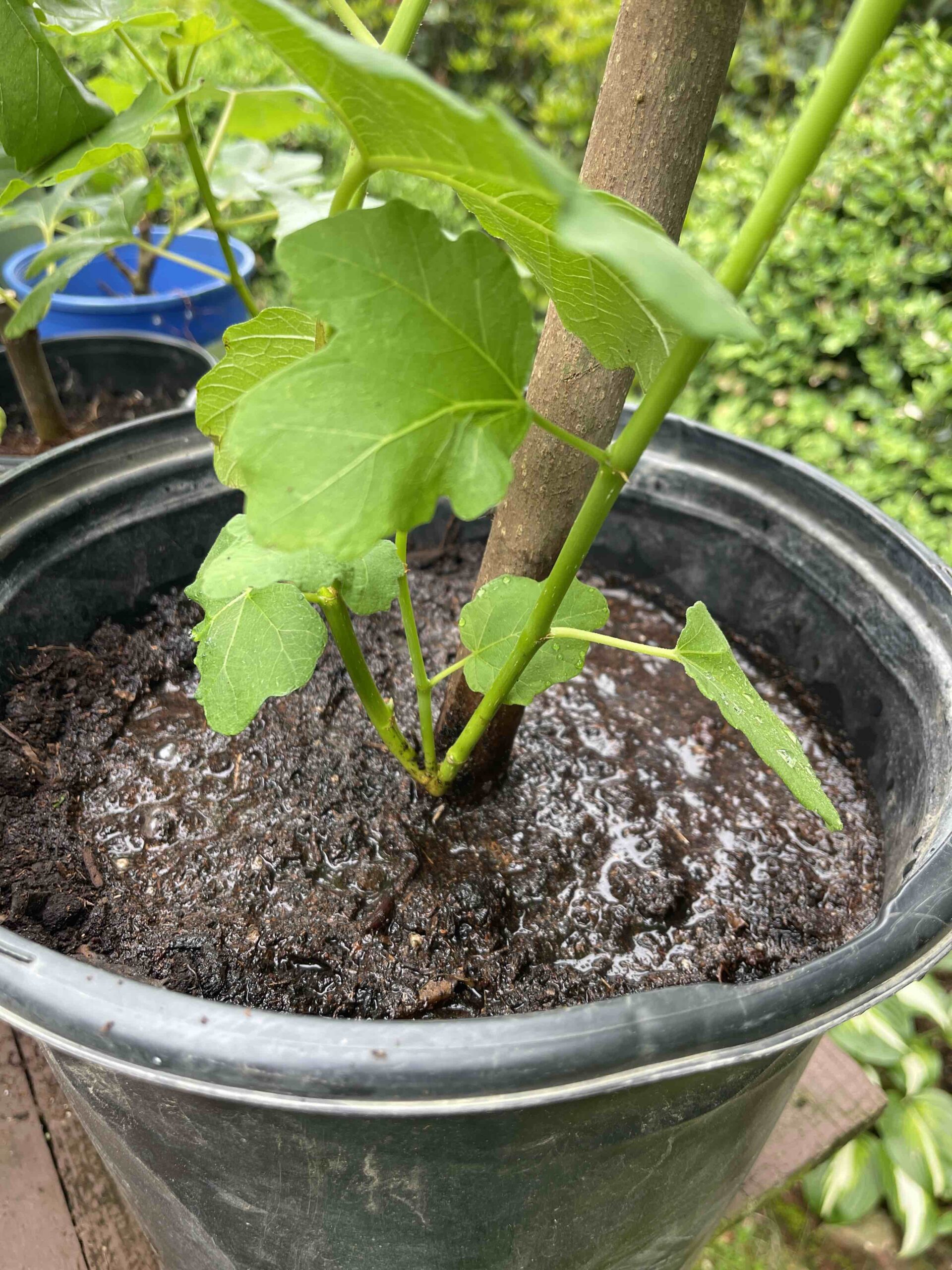
The image above is of a White Kadota fig that a good friend gave me last year, and I’ve blogged about it here and here. The photo was taken this morning after a heavy downpour.
You can clearly see the difference between brown/lignified wood and green wood.
In General:
Lignified Fig Cuttings
- Taken from dormant, mature wood, typically one to two years old.
- Woody and durable; can be stored for extended periods and are generally easier for beginners to handle.
- Usually collected in late fall or winter when the tree is fully dormant.
- Less prone to drying out and typically easier to root than softwood (green) cuttings.
Green Fig Cuttings
- Taken from the tender, actively growing tips of branches where the wood is still green and not fully hardened.
- Contain the highest levels of moisture and nutrients.
- Harvested during the growing season, while the tree is actively producing new growth.
- Extremely delicate, do not store well, and require immediate propagation.
That’s why I never buy green fig cuttings, shipping delays and handling issues make them too risky.
Final Thoughts
While aiming for lignified dormant cuttings is generally the most reliable strategy—particularly for beginners—don’t be discouraged if some cuttings are partially green. With attentive care, even less-than-ideal cuttings can thrive and grow into healthy fig trees.
If you’d like to reach out to me privately, please use the contact form on this site.
Subscribe to receive blog updates by email.
Stay tuned, keep on rootin’ and happy growing!
Leave a Reply