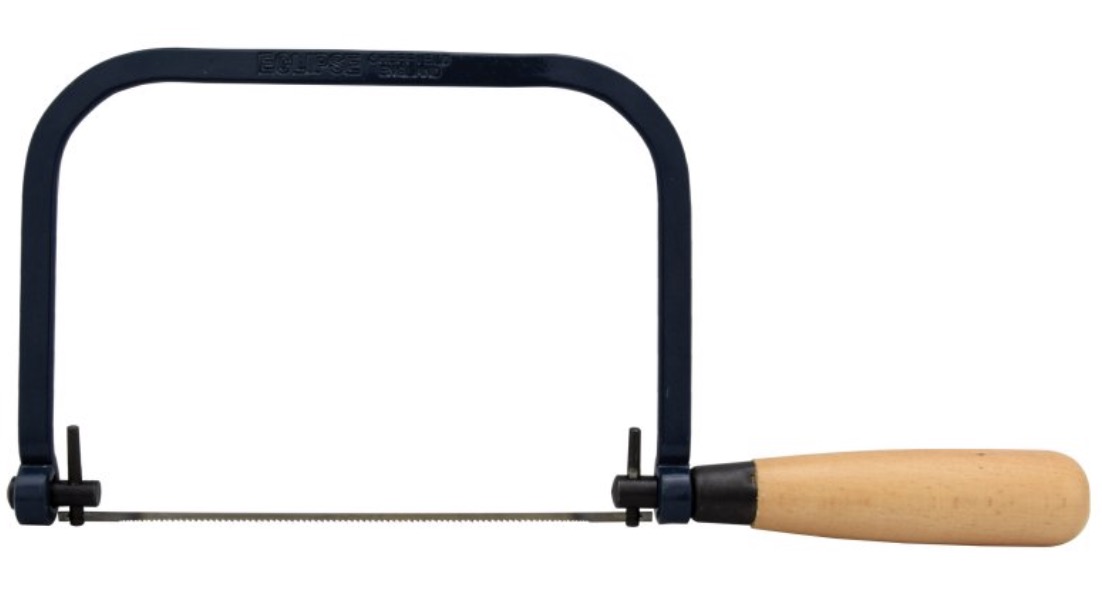
Recently, I was reading a terrific online article about TPI (teeth per inch) because I need to stock up on blades for my newly acquired coping saw. (ref 1). Here is what I learned from this article.
The number of TPI on a saw blade has a major impact on how it cuts: blades with more teeth per inch produce smoother cuts, while blades with fewer teeth cut faster but more roughly.
The article explains that this rule applies across many types of saws (table saws, circular saws, jigsaws, band saws, coping saws etc.). A higher TPI means each tooth removes less material and gives a finer finish, but it also cuts more slowly and can clog more easily. Blades with lower TPI have larger spaces between teeth, clear sawdust better, and are suited for quick, rough cuts.
The piece also notes that woodworkers often keep multiple blades with different TPIs on hand, selecting the right one depending on whether speed or finish quality is more important for the task.
General Rule of Thumb
- Low TPI (fewer teeth) → Faster cuts, rougher finish
- High TPI (more teeth) → Slower cuts, smoother finish
Aim to have at least 2–3 teeth in contact with the material at all times while cutting.
Wood Cutting (Most Common)
3–6 TPI – For rough Cuts / Construction Lumber: Fast, aggressive cuts.
Best for framing lumber, green wood, pruning, or quick breakdowns
7–10 TPI – For general Woodworking: Good balance of speed and smoothness.
Ideal for dimensional lumber, plywood, and general shop work.
11–14 TPI – Fine Woodworking / Finish Cuts: Smooth, clean cuts.
Great for trim work, furniture parts, and visible edges.
10–14 TPI – Plywood & Veneer: Reduces tear-out.
Especially useful for cabinet-grade plywood.
8–12 TPI – Hardwoods: Harder wood needs more teeth for control and clean cuts.
6–10 TPI – Softwoods: Cuts easily, so fewer teeth are fine.
The article continues with information about cutting plastic and metal, but I will not elaborate because I am only interested in wood-kind of cutting.
Bottom Line!
Speed = fewer teeth. Smoothness = more teeth.
Most woodworkers keep at least two blades on hand—one low TPI for fast work and one high TPI for clean finish cuts.
I will buy two sets of blades for my coping saw: one set with fewer teeth and another with more teeth. That way, I’ll be able to choose based on the thickness of the branch and the type of wood I’m cutting.
If you’d like to reach out to me privately, please use the contact form on this site.
Subscribe to receive blog updates by email.
Stay tuned, keep on rootin’ and happy growing!
Leave a Reply