
Dieback on a fig branch or cutting is exactly what it sounds like: the gradual death of plant tissue that begins at the tip and slowly works its way backward toward the main stem or trunk.
You’ll first notice the tip turning brown or black. What was once green and full of promise becomes dry, brittle, and lifeless. Instead of the entire plant failing, only a portion of the branch dies, usually from the tip inward.
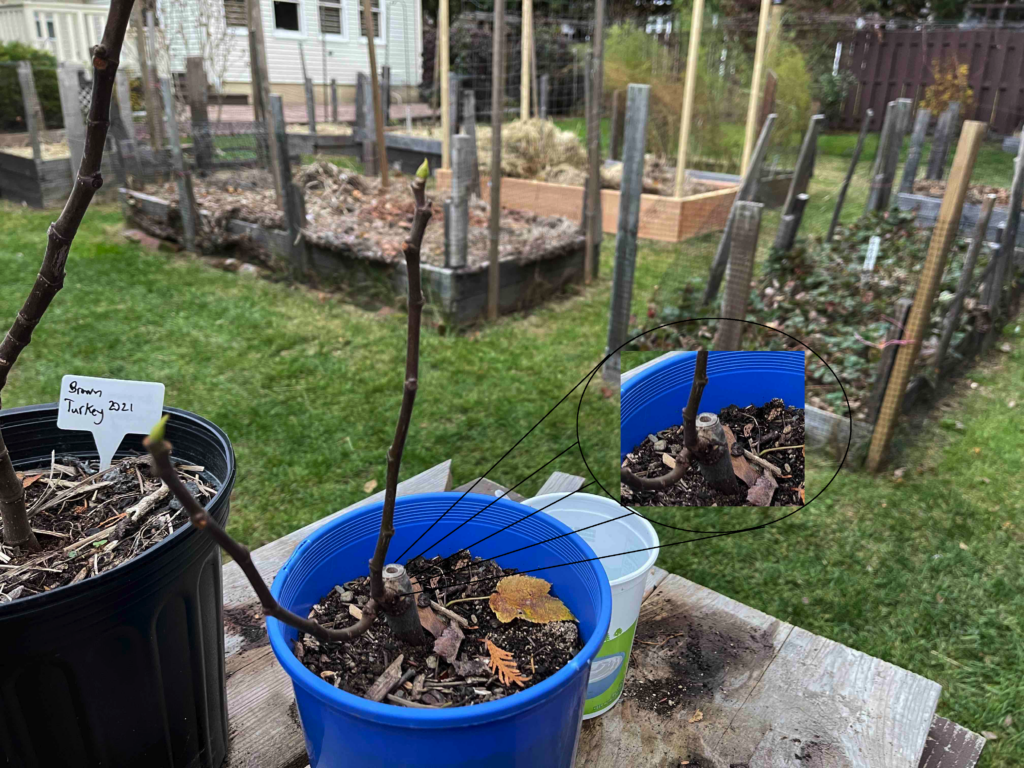
With fig trees, especially in colder zones like ours, dieback is something every grower should understand.
What Causes Dieback?
Dieback is typically triggered by stress or damage, including:
- Cold injury (very common with figs in colder climates)
- Drought stress
- Poorly sealed cuttings
- Fungal infection
- Physical damage
When it comes to fig cuttings, dieback often happens because the top of the cutting dries out. Remember, a freshly rooted (or unrooted) cutting has no established root system. It cannot replace lost moisture. If the exposed top is left unsealed, it can dry excessively, and the dieback can begin its slow march downward, sometimes ruining the entire cutting.
And that is heartbreaking when you’re working with a prized variety.
Why Sealing the Top Matters
Applying pruning sealer to the top of a fig cutting is a small step that makes a big difference.
Sealing:
- Prevents moisture loss
- Reduces the risk of fungal entry
- Protects vulnerable tissue
- Stops dieback before it begins
It takes seconds to do and can save months of effort.
As fig growers, especially here in challenging climates, we must be proactive. Protect the cutting early, and you greatly increase your chances of success.
Stop dieback before it starts!
If you’d like to see this process in action, check out my video here:
If you’d like to reach out to me privately, please use the contact form on this site.
Subscribe to receive blog updates by email.
Stay tuned, keep on rootin’ and happy growing!
Leave a Reply