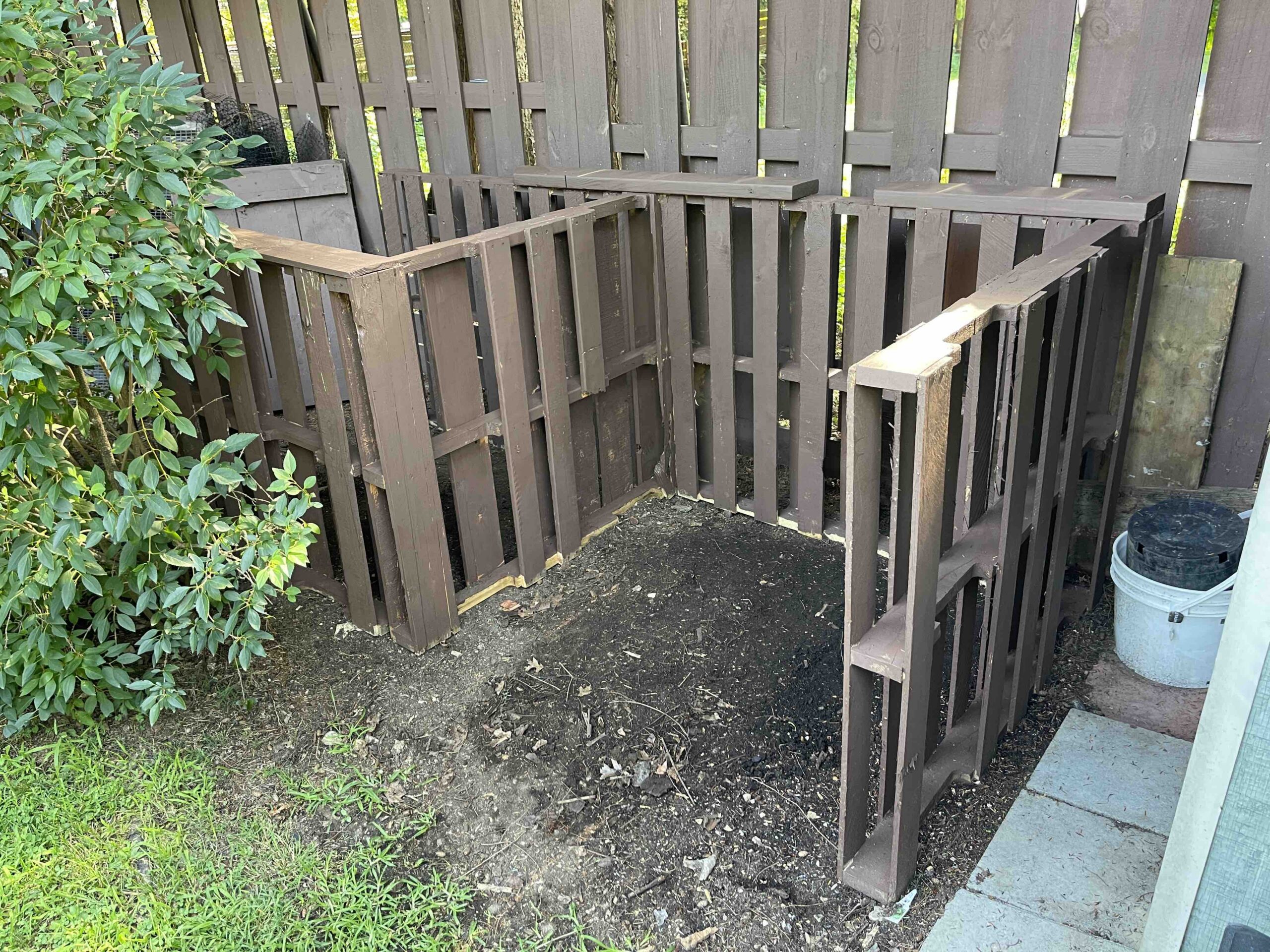
The old pallets that made up my compost bins were about ten years old. After a decade of exposure to the elements, the wood had finally reached the end of its useful life, it was badly rotten, and the entire structure had to be rebuilt from scratch.
So, I got rid of the old pallets, drove around the village, and managed to find five new ones. I brought them home, gave them a fresh coat of paint, and then put together the new compost-bin structure. Each pallet provides roughly one cubic yard of space, which means that one full bin will eventually produce enough finished compost to fill a raised bed.
My plan is to create two new raised beds in the early spring of 2027, and for that I will need a substantial amount of high-quality soil. Buying bagged “soil” is, in my opinion, something of a joke. I know exactly what goes into my compost, and I have complete confidence in what eventually comes out of it. I will happily use my own compost any day of the week.
This past late spring, in a moment of weakness, I bought several bags of “soil” that happened to be on sale at one of the big-box stores. Let me just say that I regretted the decision almost immediately. But I digress.
We are fortunate to have plenty of material available for the compost. On our property, we have three large flowering dogwood trees and approximately thirty forsythia shrubs. We also have the benefit, or perhaps I should say the chore, of having a huge oak tree belonging to a neighbor nearby. A good portion of that tree’s leaves inevitably finds its way onto our property in the fall, providing us with an excellent supply of organic material.
More recently, some very good neighbors gave me a small quantity of their grass clippings, which went straight into the new compost. And because I cook a great deal at home, I save vegetable peelings, trimmings, and other suitable kitchen scraps and add them to the pile as well.
There is another, rather satisfying benefit to composting all of this material: our garbage can is considerably lighter, and it contains far less of the wet, smelly organic waste that otherwise ends up in the trash. What would have been garbage becomes something useful instead.
I turn the compost at least twice a month. It is a fair amount of work, but it is essential. A healthy compost pile needs three basic things: organic material, air, and water. If the material is simply left sitting without being mixed and turned, the pile can become anaerobic, which slows the composting process considerably and can lead to unpleasant odors.
Turning the compost introduces fresh air throughout the pile and helps restore the aerobic environment that beneficial microorganisms need to break down the organic material efficiently. In other words, a little physical labor on my part helps nature do its job.
Planning next year’s garden is one of my favorite activities, and I thoroughly enjoy every part of the process, from deciding what I want to grow to preparing the soil that will eventually support it. There is something particularly satisfying about knowing that the compost I am building today will become part of the garden I plant tomorrow.
And so, it is my pleasure to share these two images of my newly rebuilt compost bins. They may not be the most glamorous structures on the property, but to me they represent preparation, sustainability, hard work, and the promise of next year’s garden.
Enjoy!
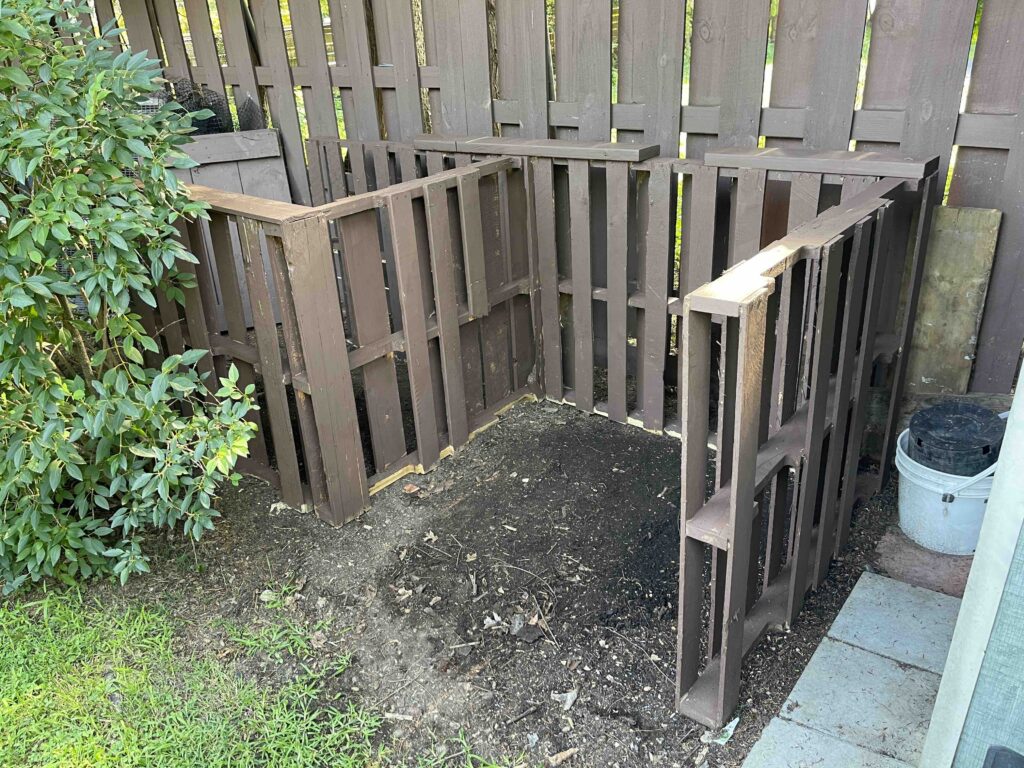
This is the new compost bins ready to be used.
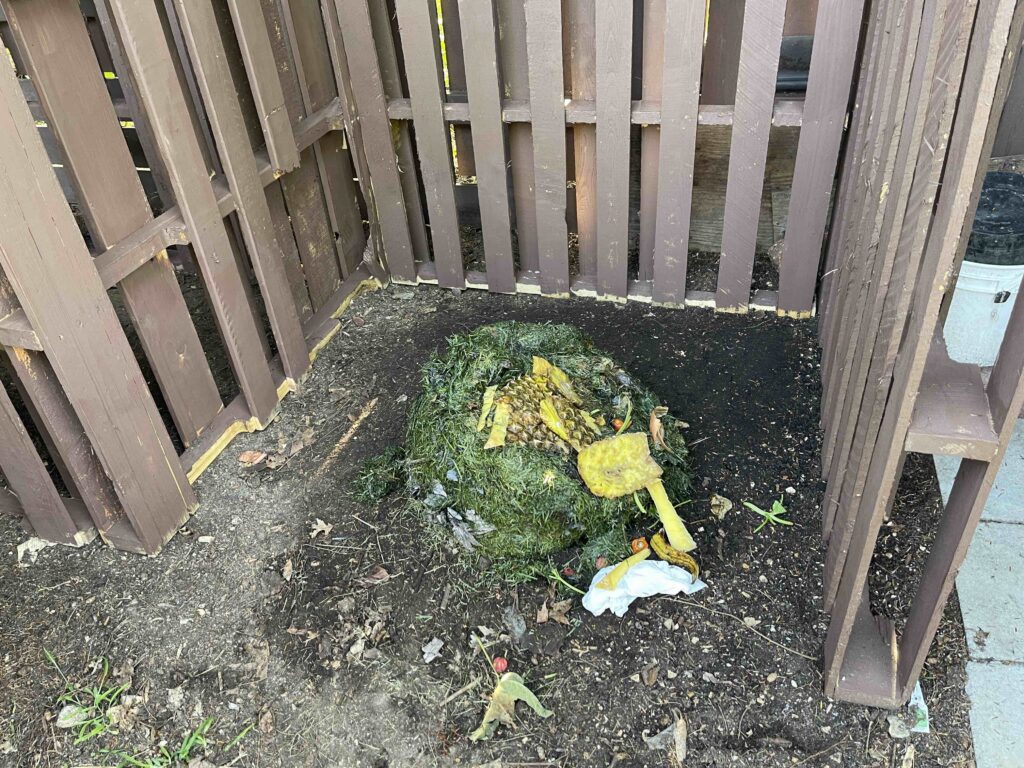
Yes! Grass clippings, corn husks, and the skin of a pineapple. Let the good times begin.
If you’d like to reach out to me privately, please use the contact form on this site.
Subscribe to receive blog updates by email.
Stay tuned, keep on rootin’ and happy growing!
Leave a Reply