Every year as I do the fall pruning I find a few low laying branches on each tree that have touched the ground and have grown roots. Every year, I make a note about this, and then, the following year, I always forget to look at my notes. This year I’m getting smarter as I control the process by starting it very early.
I find this process much easier with less stress as compared to air layering.
It is called Ground or Simple Layering. If you bury part of a living fig branch under soil while it’s still attached to the tree, there’s a very good chance it will root and create a new fig plant.
Here’s what happens:
- The buried section stays connected to the mother tree, so it continues receiving water and nutrients.
- Moisture around the buried branch encourages new roots to form at the buried section.
- After several weeks to a few months, you may have a substantial root system.
- You can then cut the rooted section away from the mother plant and transplant it as a new fig tree.
For figs, it’s particularly easy!
I choose a flexible, healthy branch, bend it down to the ground, and bury perhaps 4–8 inches of the branch. Keep the soil consistently moist, but not waterlogged.
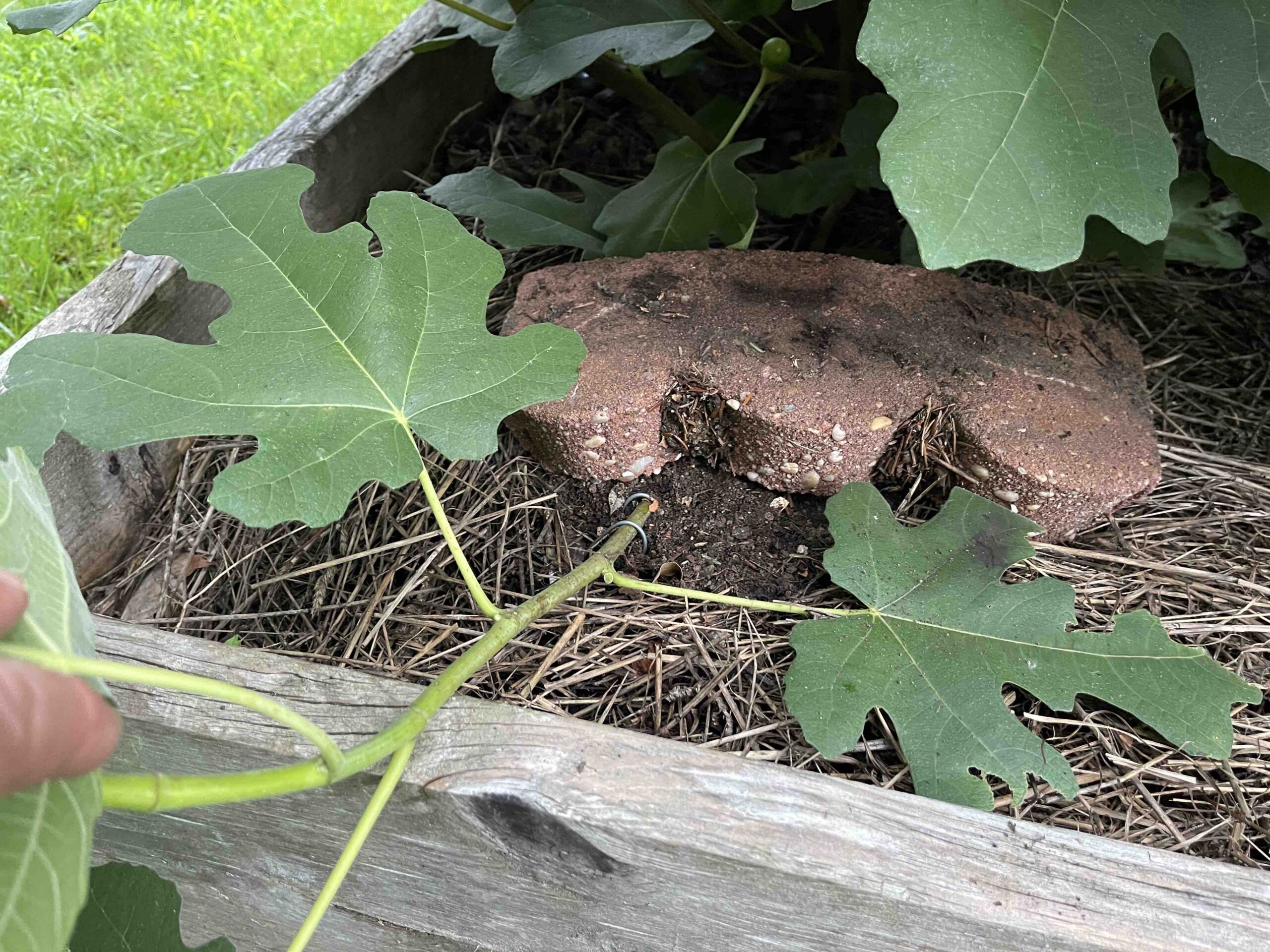
One important point: Don’t bury the entire branch. Leave the growing tip above the soil. I use two or three metal pins to hold the branch firmly against the ground. Once the branch is securely in place, I add several handfuls of soil directly over the section of the branch where I want the roots to develop. Finally, I place a large rock or one or two bricks on top of the soil. This adds weight and keeps the branch firmly in contact with the soil, ensuring that it does not shift or move while the roots are developing.
The key is to keep the branch securely anchored and maintain good contact between the branch and the soil. With time, the covered section of the branch can develop roots and eventually become a new, independently growing plant.
Once you see good new growth and/or roots have developed, you can cut the new plant from the mother tree.
For your fig collection, this is actually a very easy way to clone a new fig tree without taking a cutting.
July or early August is a good time to do this, especially with a healthy flexible branch.
A few images of the process:
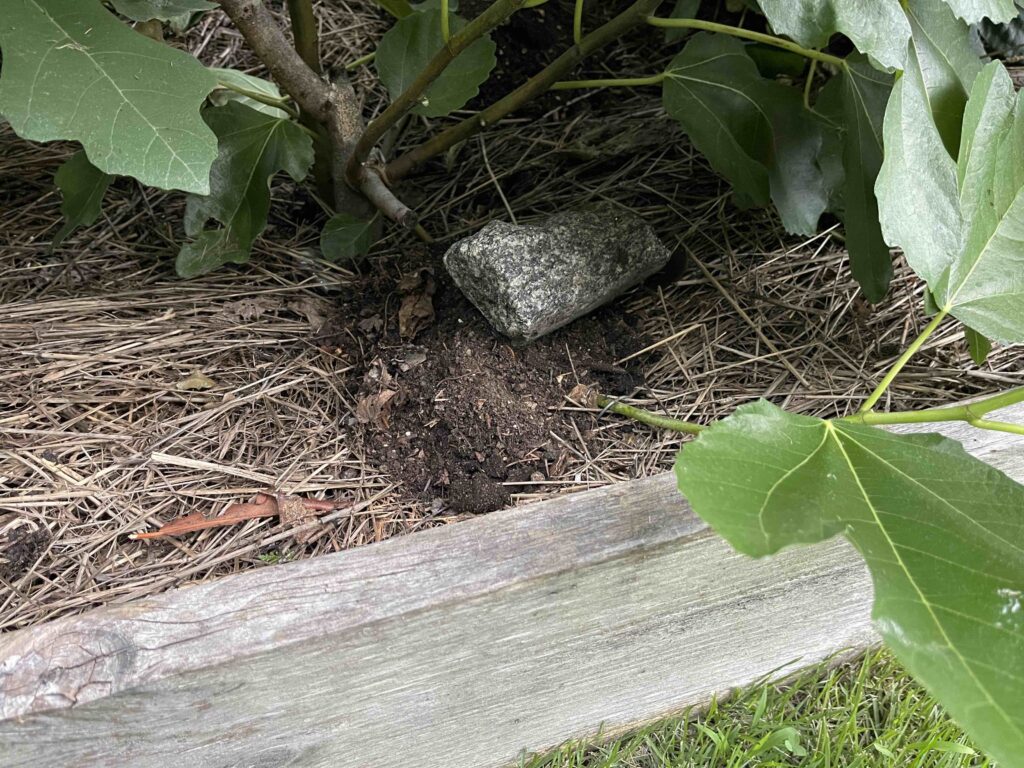
In the image above, I’ve added two metal clips to hold the branch securely against the ground. I then added soil over the section of the branch where I want the roots to develop and placed a large rock on top to keep everything firmly in place.
The clips and the added weight of the rock help prevent the branch from shifting, ensuring that it remains in constant contact with the soil while the rooting process takes place.
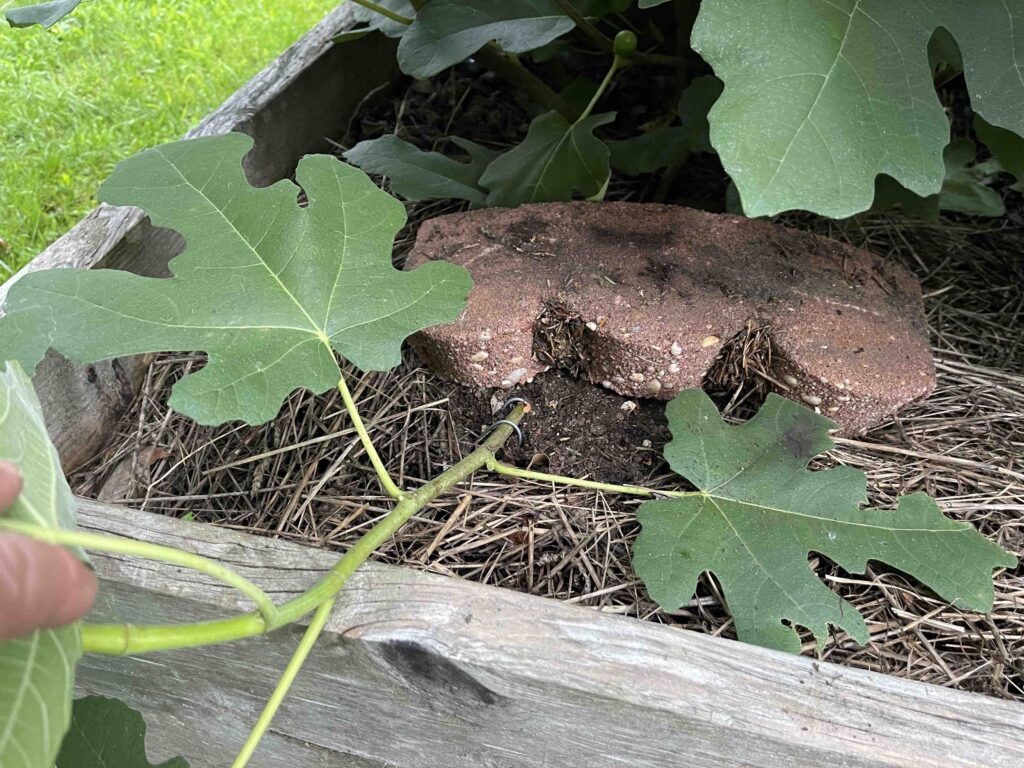
In the image above, you can clearly see the two metal clips holding the branch securely in place. There is another clip on the opposite side. This particular tree is a Red Lebanese fig.
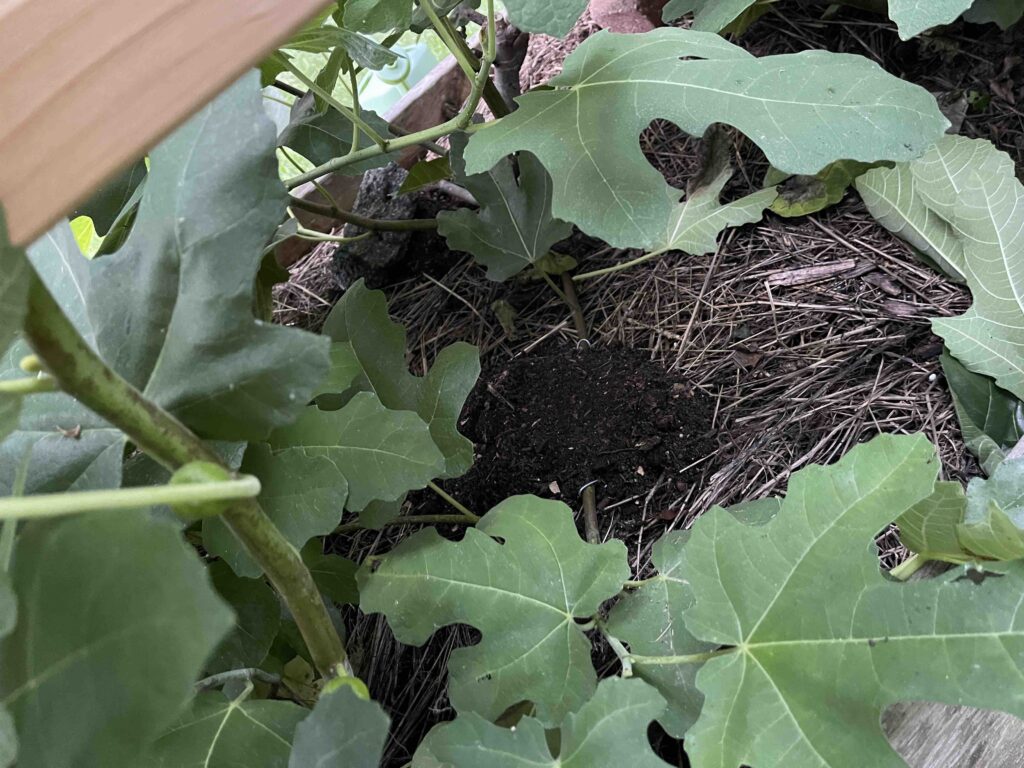
In the image above you can see the amount of soil I am using.
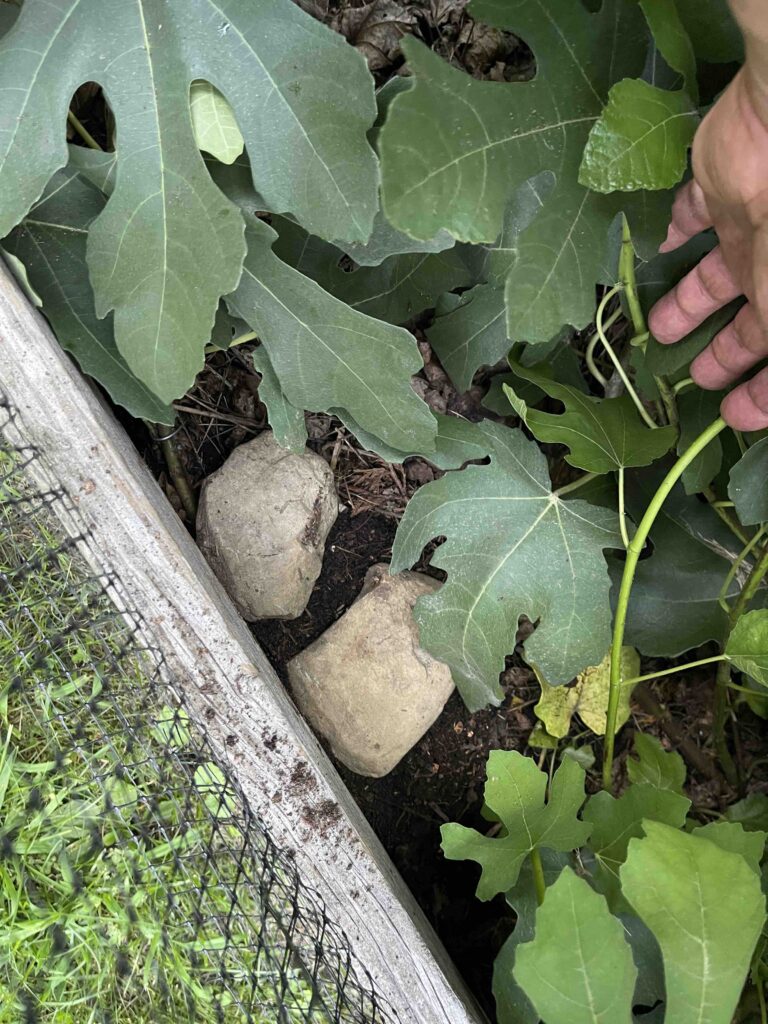
In the image above I’m using two smaller rocks to hold everything down.
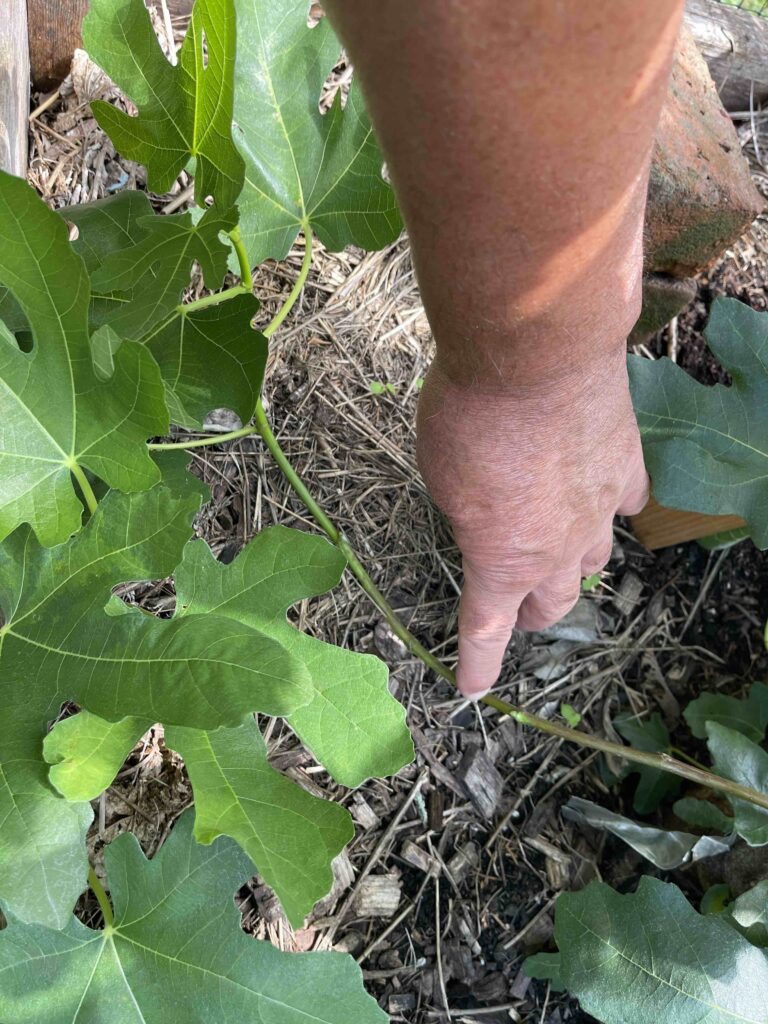
In the image above, I am inserting the metal clip that will hold the branch securely against the ground. I purchase these clips at Habitat for Humanity of Newburgh, Restore, where they sell a wide variety of new and gently used building materials, tools, and other items. I enjoy shopping there because my purchases not only help me find useful materials for my garden projects, but also support a local organization and its mission to help build and improve homes in the community.
I also make it a point to donate my change. Whatever change I receive at the register goes into the huge glass jar they keep next to the cash register. It’s a small contribution, but it’s an easy way to give a little extra support to an organization that does so much good in the local community.
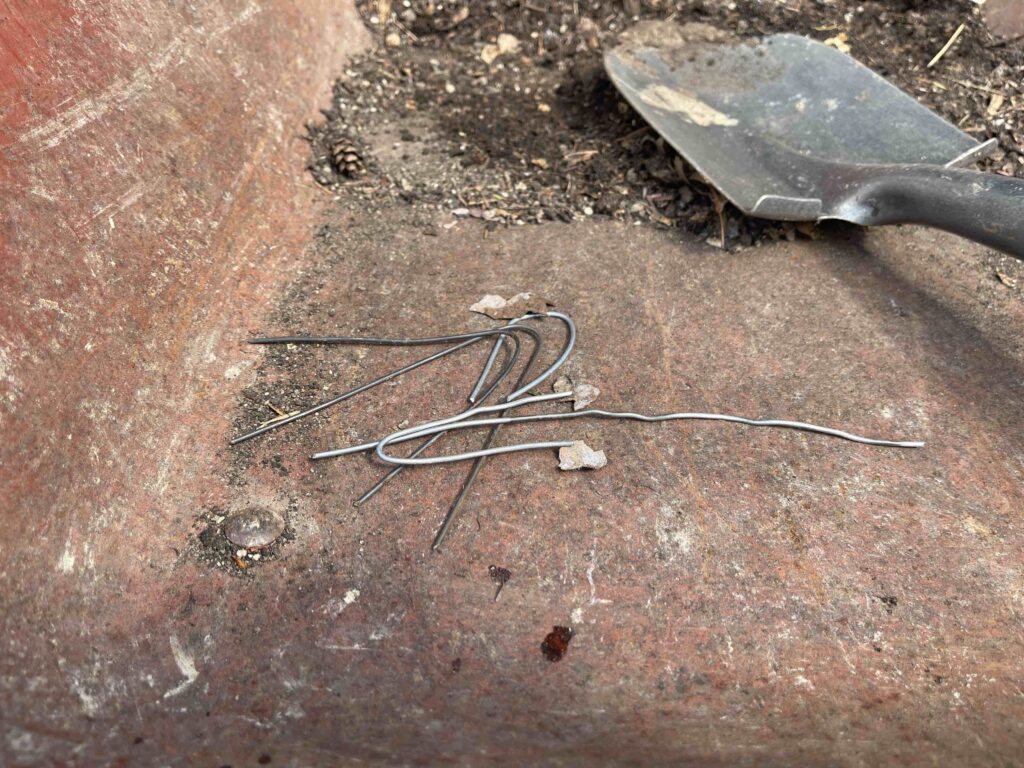
The wheelbarrow where I keep the soil and metal clips. Good times!