Just a few days ago, I blogged about the construction of my two new compost bins. As I mentioned then, one of the reasons I care so much about composting is the quality of the finished product. There is something especially satisfying about knowing exactly where your compost came from and what went into it. In my case, it will be made from nothing more than the organic materials generated here at home and as pure and natural as compost can be.
Once the compost has fully broken down, I put it through a sifter, mix it with some peat moss and use the mixture in my garden. I’m also planning to add three raised beds, which means I’ll need a considerable amount of good soil to fill them. Having my own supply of rich, homemade compost will be a tremendous help. It is not only economical, but it also gives me the opportunity to improve the soil using something I produced right here on my own property.
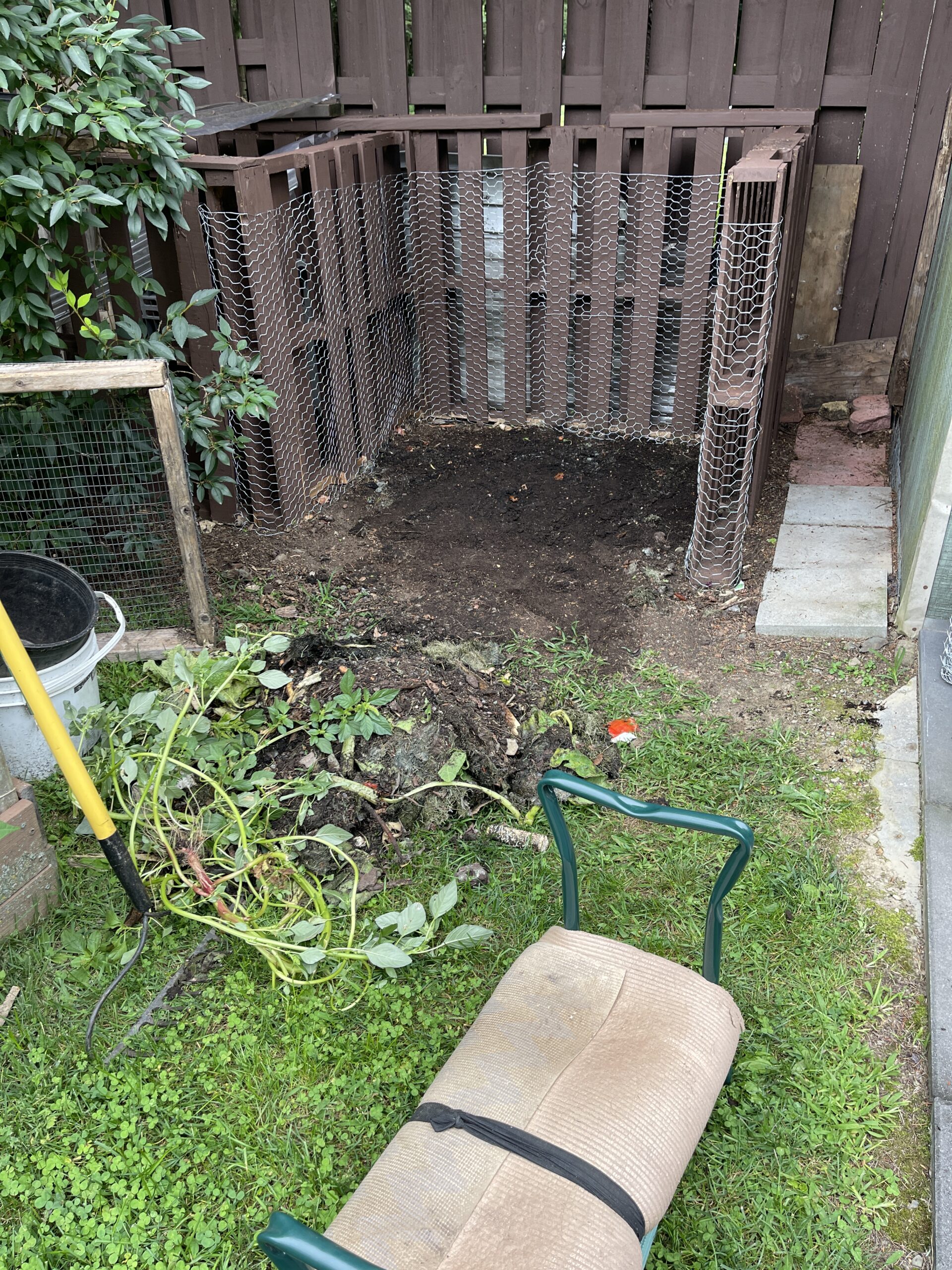
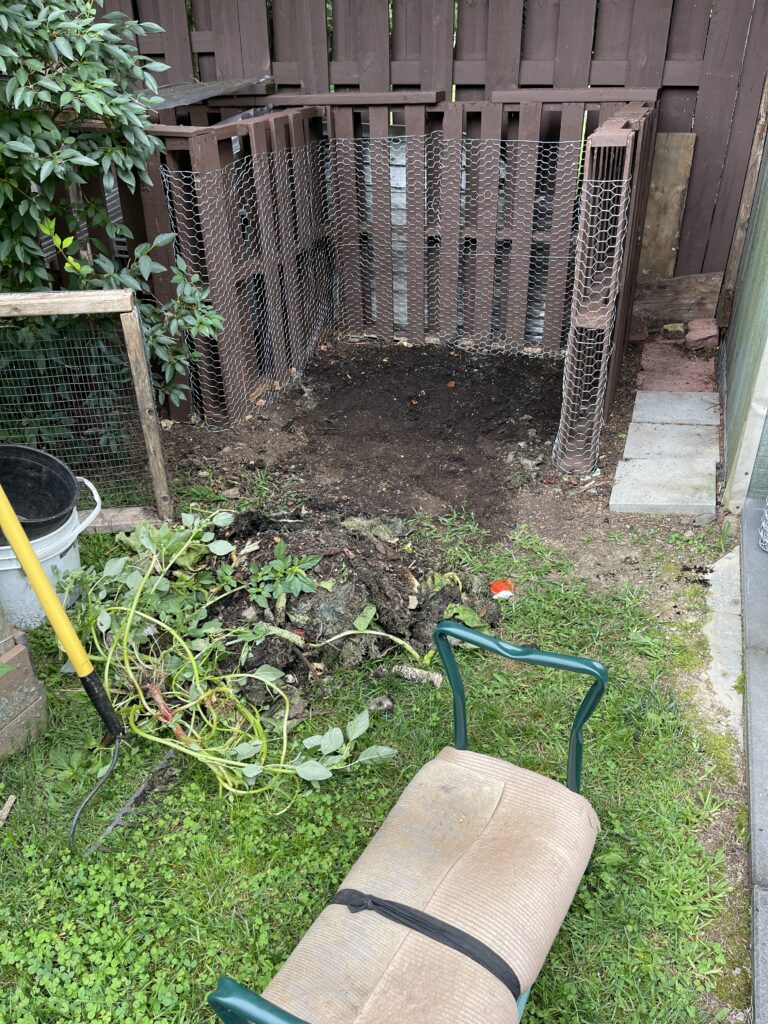
I do have a small but important update to share about the construction of the compost bins. I recently covered the interior of both bins with six-foot-wide chicken wire. Each bin is approximately one cubic yard (3 feet x 3 feet x 3 feet), and I used about 19 feet of chicken wire for the job.
The chicken wire is an important improvement over my original design. In the previous version, what I now think of as Version 1, I used plastic mesh to line the bins. Unfortunately, that material did not perform nearly as well as I had hoped. It lacked the strength and durability I needed, and I quickly realized that I would have to rethink that part of the design.
That brings me to Version 2.
This time, I replaced the plastic mesh with chicken wire, which should provide considerably more strength while still allowing plenty of air to circulate through the compost. Proper airflow is essential for good composting, so I’m hopeful that this relatively simple change will make a noticeable difference.
For now, the bins are ready to go, and I’m looking forward to seeing how Version 2 performs (future blog entries?). There’s always a bit of experimentation involved in gardening and composting. Sometimes the first attempt teaches you what needs to change, and the second attempt gets you a little closer to getting it right.
And if all goes according to plan, those compost bins will eventually help fill three new raised beds with rich, healthy soil. That makes the effort more than worthwhile.
If you’d like to reach out to me privately, please use the contact form on this site.
Subscribe to receive blog updates by email.
Stay tuned, keep on rootin’ and happy growing!
Leave a Reply