In my own backyard, I use this exact same winterization method on all of my in-ground fig trees because, quite simply, it works. Over the years, it has proven to be reliable, practical, and effective against our unpredictable Hudson Valley winters.
That being said, fig trees have personalities of their own. Some wake up early and explode with growth, while others prefer to sleep in long after spring has arrived. Even when treated identically, different varieties can respond very differently to winter conditions.
To illustrate this point, I’d like to show you three of my ‘unknown’ fig varieties. Despite receiving the same care and protection, each one emerged from winter with its own unique story to tell.
Case #1
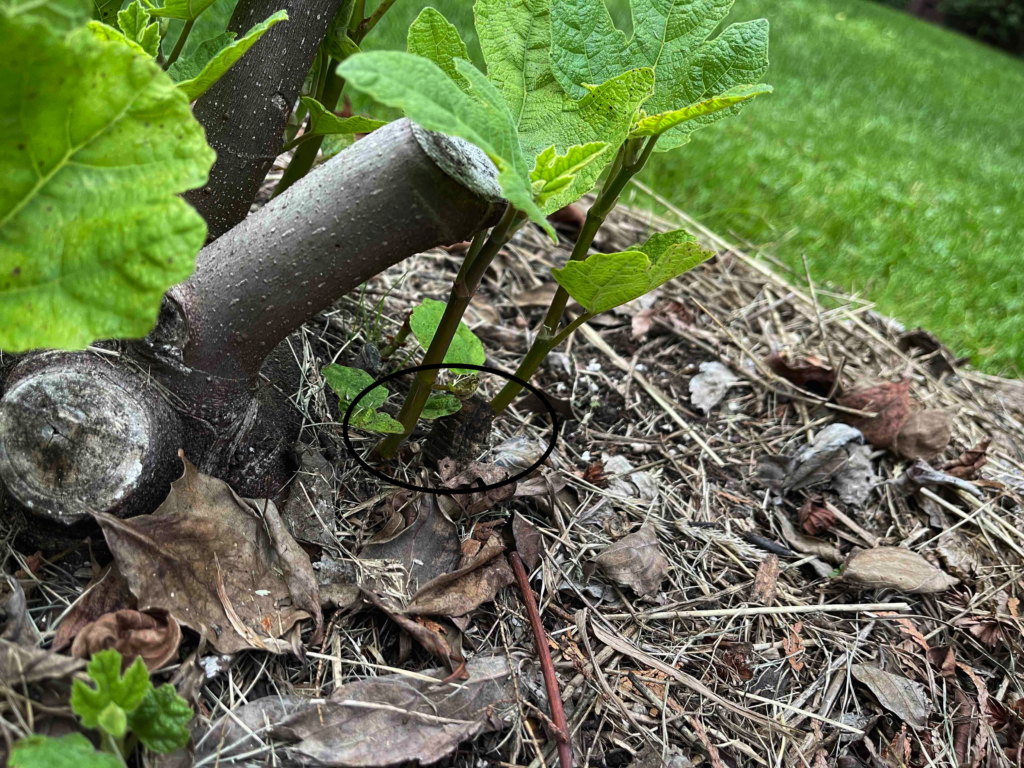
As you can see, this fig tree decided to start fresh by sending up new shoots (shown in the circle) directly from the roots. Fig trees are remarkably resilient, and even after a harsh winter they often bounce back from below ground like nothing ever happened.
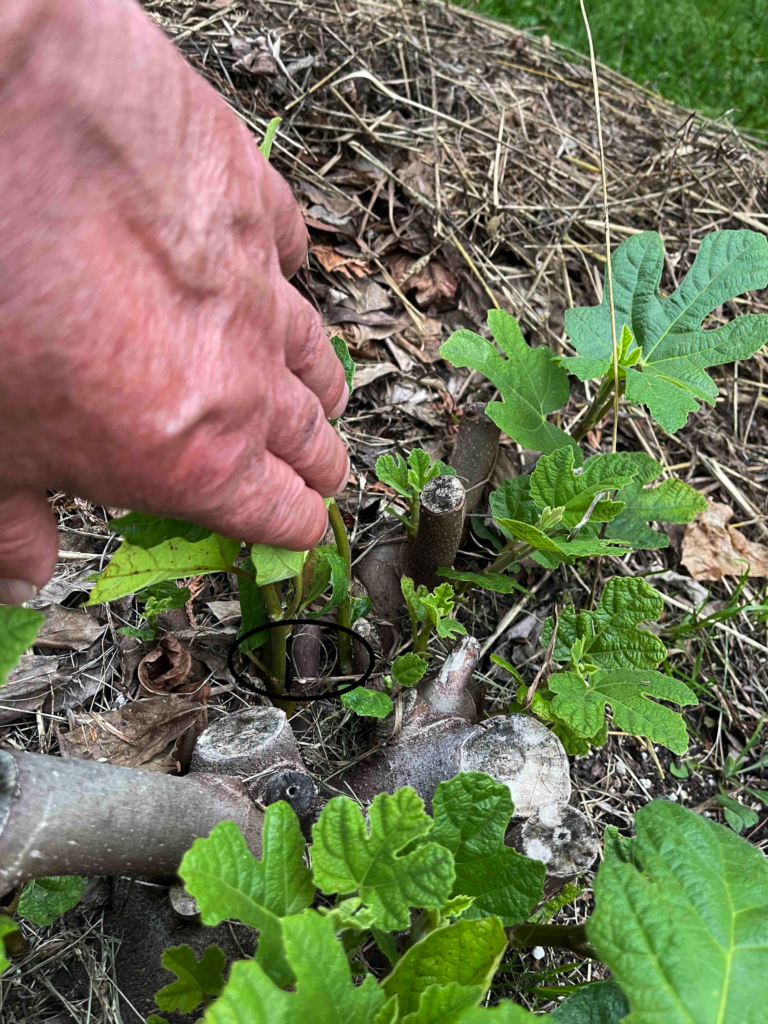
In the picture above you can see the same pattern.
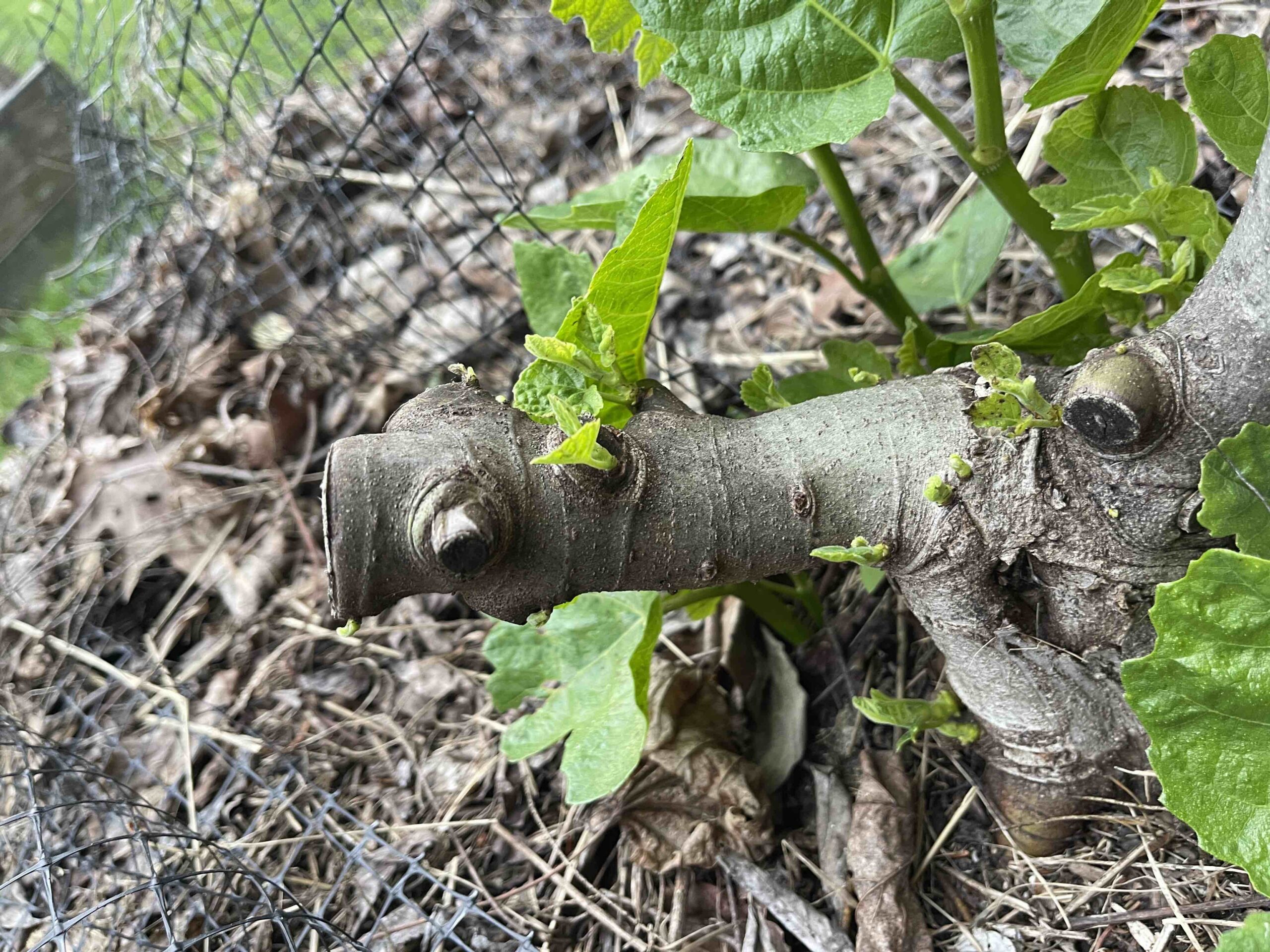
By the way, there is some discoloration on last year’s pruned branches. This can be easily fixed with some sandpaper and them apply pruning sealer.
Case #2
This is another ‘unknown’ fig variety that I purchased online after being assured that it would perform exceptionally well in the ground here in Zone 6b. Of course, with figs, there’s always a little leap of faith involved—especially when dealing with mystery varieties.
The 2026 growing season marks its second year in the ground, and so far it has been extremely impressive. It came through the winter beautifully and was among the very first of my fig trees to wake up this spring. Early bud break, healthy growth, and strong vigor are always encouraging signs, especially after a Hudson Valley winter.
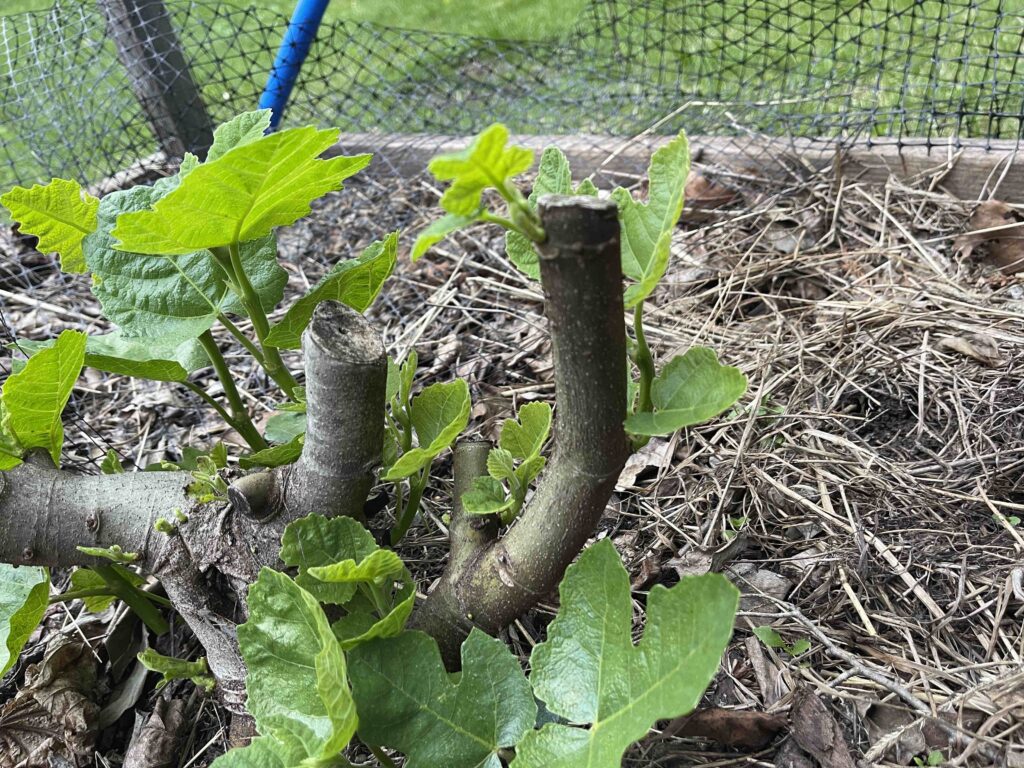
This fig tree behaved similarly to the first one, sending up new growth from the lower part of the plant. However, in this case, I was pleasantly surprised to see buds developing on several of the upper nodes as well. That is always an encouraging sign and a strong indication that the tree winterized successfully.
When upper nodes survive the winter and begin pushing new growth in spring, it usually means the protective system did its job and prevented significant cold damage to the above-ground structure. For a fig grower in Zone 6b, moments like these are small victories worth celebrating.
Case #3
And now the coup de grâce. This in-ground fig tree is absolutely LOADED with new growth. Buds and shoots are emerging from everywhere, top nodes, middle nodes, and even from the base of the tree itself. After a long winter, this is exactly the kind of explosive spring awakening a fig grower hopes to see.
The tree clearly came through the winter with plenty of stored energy and wasted no time reminding me just how vigorous fig trees can be when they’re happy. Seeing growth at multiple levels of the tree is always a reassuring sign that both the upper structure and root system survived the cold season remarkably well.
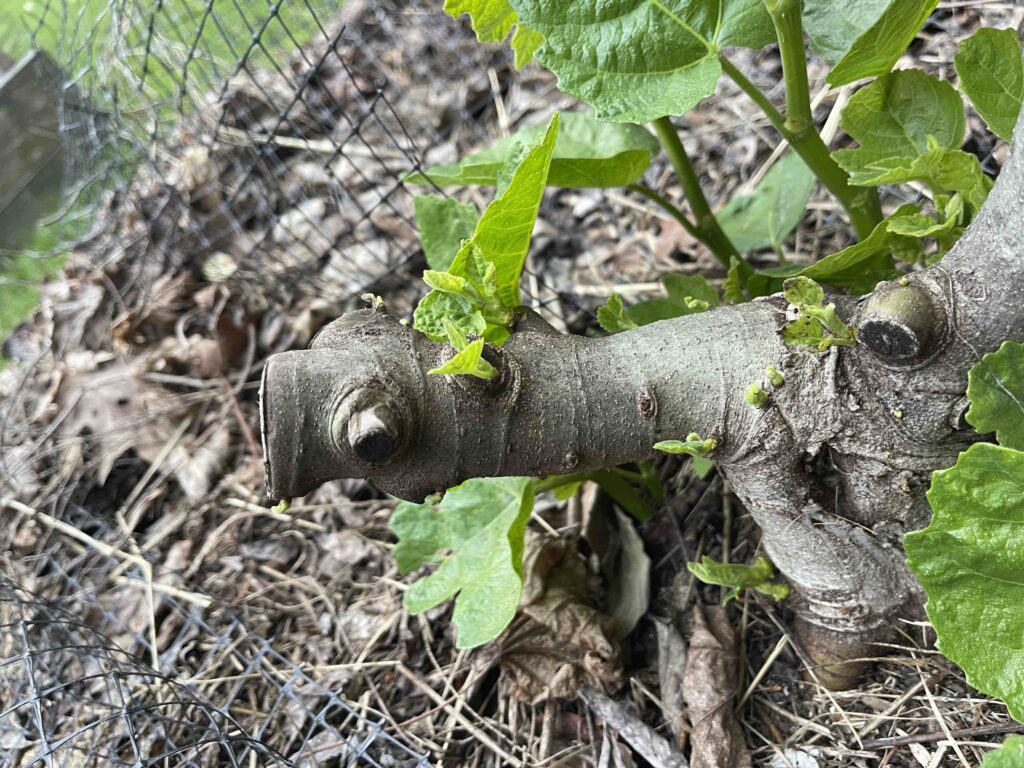
Here is another view of this fig tree.
This fig tree will also need a bit of sanding and an application of pruning sealer, but that will be the subject of another post in a week or so.
If you’d like to reach out to me privately, please use the contact form on this site.
Subscribe to receive blog updates by email.
Stay tuned, keep on rootin’ and happy growing!
Leave a Reply