For a variety of reasons, this fig tree needed to be relocated, but the primary issue was sunlight, or rather, the lack of it. The original location simply did not provide enough direct sun for the tree to truly thrive. As every fig grower eventually learns, figs absolutely adore sunshine.
The tree has now been moved to a much better location where it receives a solid seven hours of direct sunlight each day. With improved exposure, I’m hopeful that the tree will reward the move with stronger growth, healthier foliage, and, of course, plenty of delicious figgies in the seasons ahead.
I like using raised beds for various reasons.
- Easy fig tree winterization;
- Controlling the soil. Every year, due to natural soil compaction, you have to replenish your soil. Also, you can mulch around your fig tree(s) much easier.
- Surround each bed with netting to deter little animals: rabbits, raccoons and woodchucks;
- Better garden organization. Better garden organization and visual appearance.
- Easier soil amendment management. It’s much easier to add compost, mulch, and fertilizers exactly where needed without affecting surrounding soil.
- Since I subscribe to the Ruth Stout philosophy of deep mulching, better week control;
- Also the sides of each bed provides a better natural barrier that separates your grass area from your garden.
The best time to transplant a fig tree to a new location is during its dormant season, typically in late fall after the leaves have dropped or in very early spring before new growth begins.
For gardeners in colder regions like Zone 6b in New York, early spring is usually the safest and most practical time. By then, the ground is workable, the worst winter temperatures are behind you, and the tree can begin establishing roots before the heat of summer arrives.
During dormancy, the fig tree is essentially “sleeping.” Since it is not actively supporting leaves and fruit, transplanting places far less stress on the tree. Moving a fig tree during the growing season can shock it badly, leading to:
- Branch dieback;
- Stunted growth;
- Leaf drop;
- Severe transplant stress.
I think I caught it right at the time it was waking up.
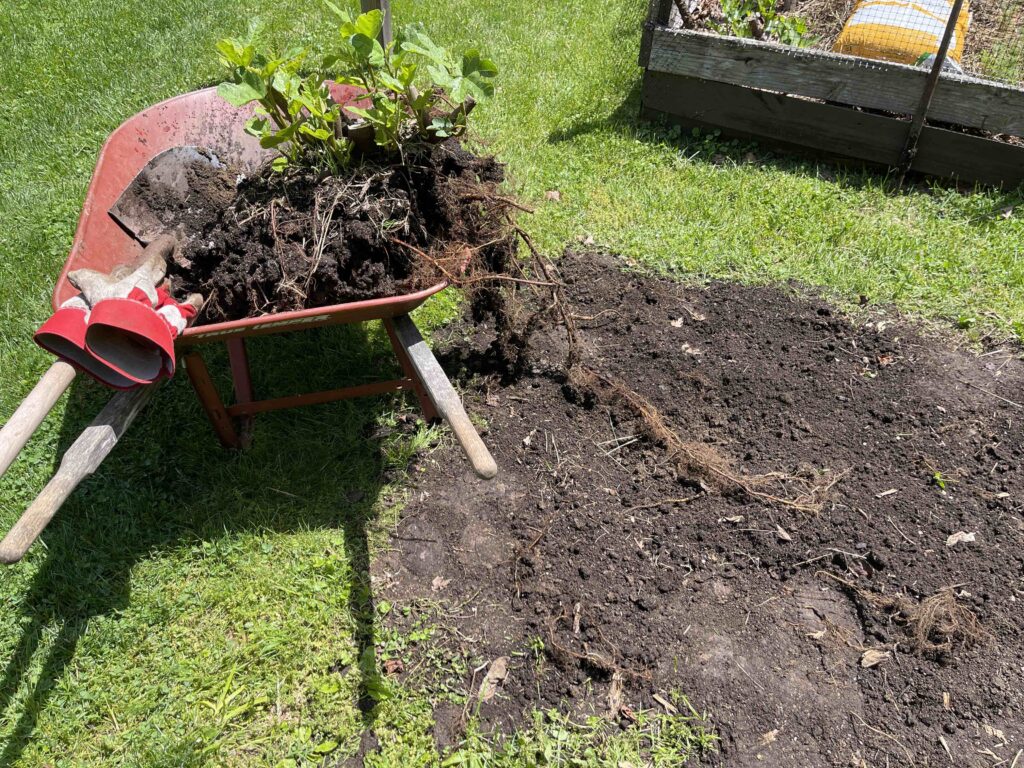
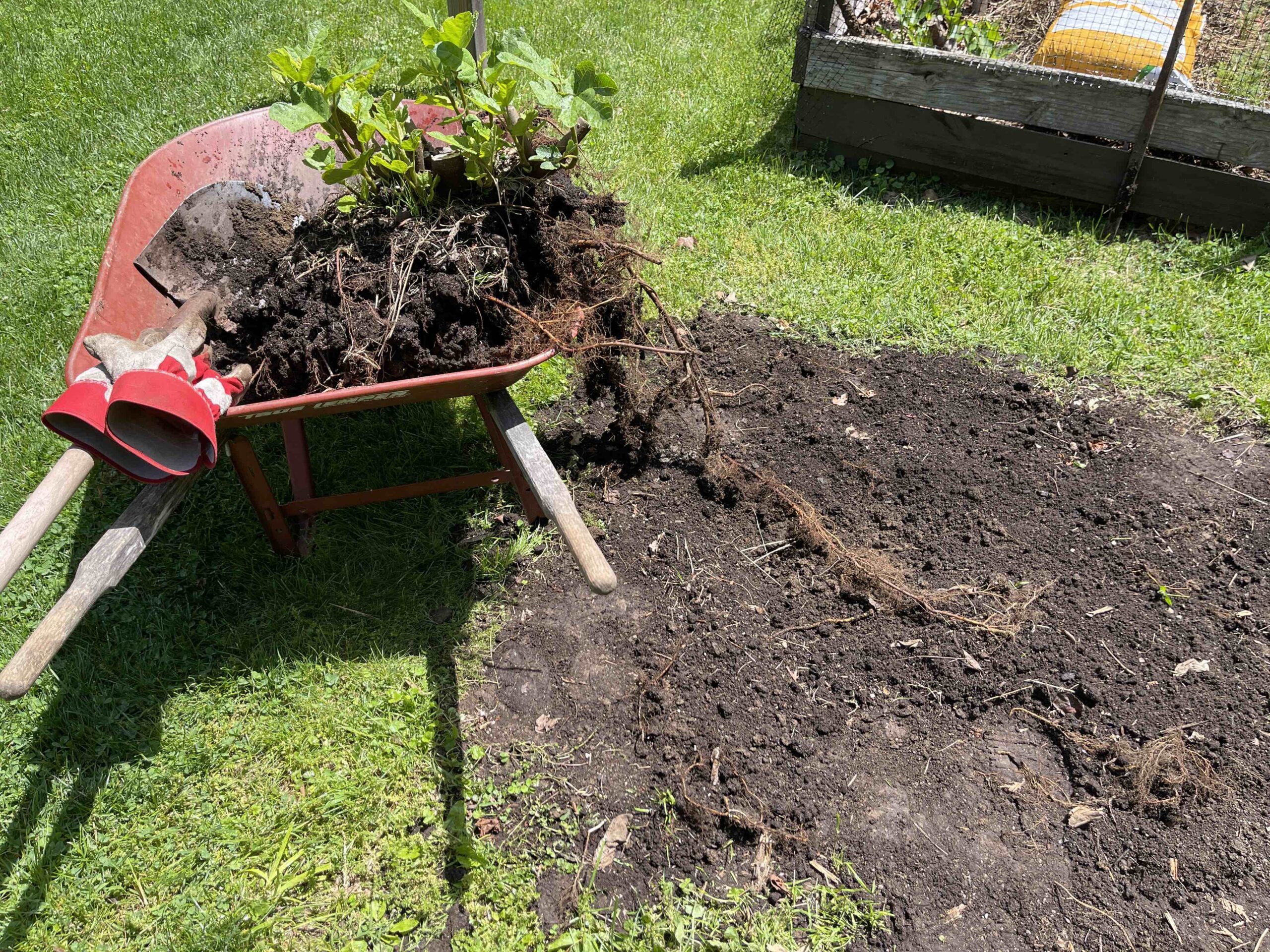
As you can see in the picture above, I made every effort to preserve as much of the root ball as possible. Of course, that is much easier said than done, especially with an established fig tree.
The first step was removing most of the soil surrounding the tree, roughly one foot out from the base. Since the tree was planted in a 4′ x 4′ raised bed, that meant moving a tremendous amount of soil, about five wheelbarrow loads in total. Nothing went to waste, however, because all of that rich soil was transferred directly into the new planting location.
Once the digging was complete, the true challenge revealed itself: the root ball was HEAVY. Really heavy. The kind of heavy that makes you question your life choices halfway through the lift. But somehow, through determination, stubbornness, and probably a little adrenaline, I managed to get the job done.
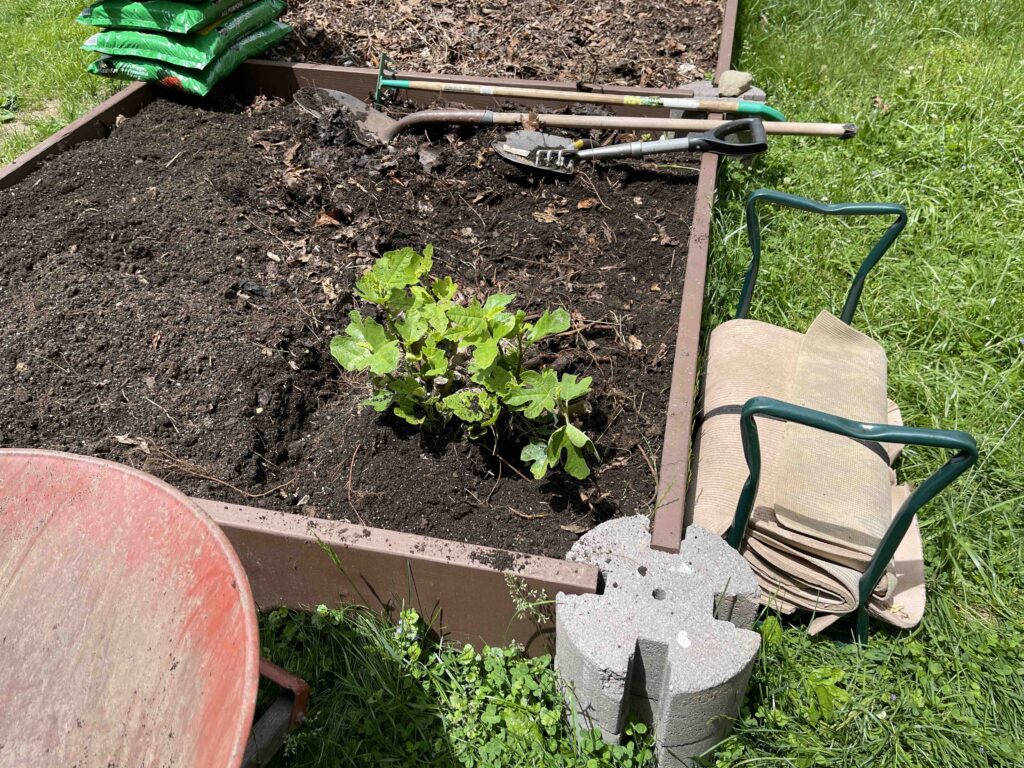
And here it is, standing proudly in its new home as if it had been there all along. This raised bed is filled with all kinds of goodness straight from my compost heap. Last year, knowing that I planned to build several new raised beds, I started preparing well in advance. I saved mountains of fall leaves and months upon months of vegetable scraps from our kitchen. And let’s not overlook the steady contribution of 4–5 banana peels every single week—my compost pile has been eating better than some people.
All of that organic matter broke down into rich, dark compost that now serves as the foundation for this new planting bed. To me, building soil is just as important as growing the plants themselves. Healthy soil creates healthy fig trees.
After transplanting, I gave the figgy a deep watering using water collected from our neighbor’s rain barrel, no fertilizer, no additives, just pure water. I use that water whenever I can because it feels like giving the plants nature in its purest form. And honestly, pure has to be a good thing… right?
Tomorrow, I will add a thick layer of straw to this bed in keeping with Ruth Stout’s famous deep-mulching method. I have become a strong believer in the power of mulch, not only for suppressing weeds and retaining moisture, but also for slowly enriching the soil as it breaks down naturally over time.
Ruth Stout’s gardening philosophy was wonderfully simple: work with nature instead of constantly fighting against it. Her methods challenged traditional gardening practices and inspired generations of gardeners to put down the rototiller and let mulch do much of the heavy lifting.
In the near future, I plan to create a separate page dedicated entirely to Ruth Stout—who she was, the gardening principles she championed, and the lasting impact she had on organic and no-work gardening.
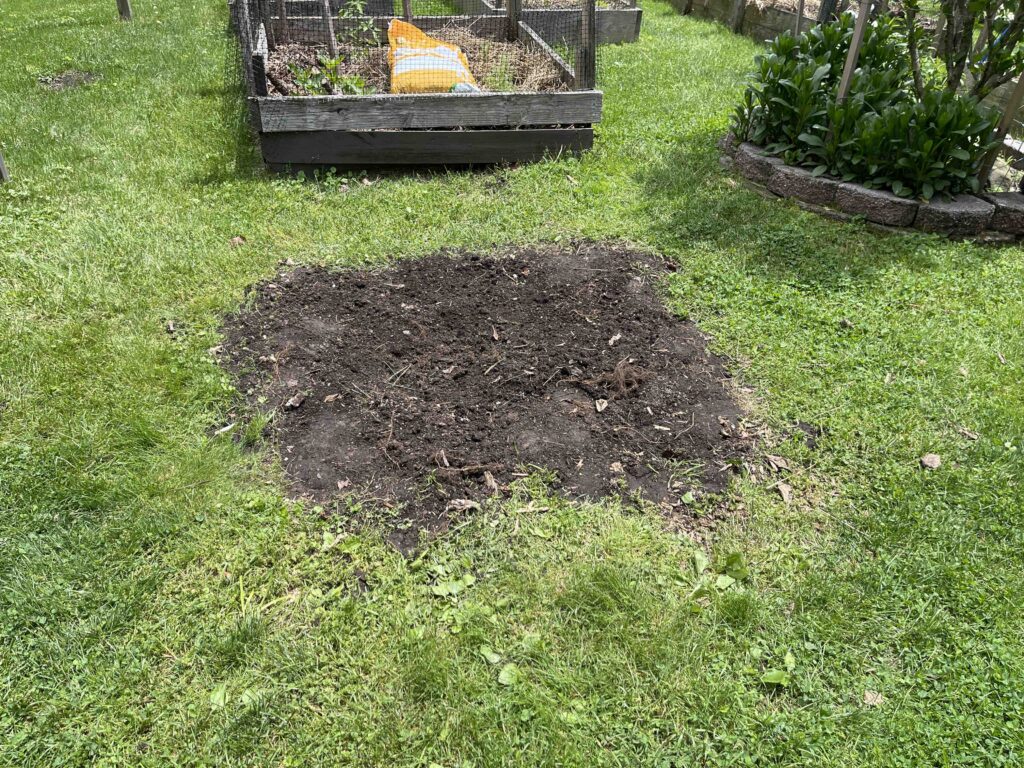
And here is what was once the home of a handsome fig tree growing proudly in its raised bed. Now, it stands as an empty patch of earth, a quiet reminder of the tree that once occupied the space.
At first glance it may look a little sad, but gardeners know better. Empty spaces in a garden are never truly empty for long. Soon enough, this area will receive a fresh layer of grass seed, and before long nature will begin reclaiming it in its own beautiful way. In gardening, endings and beginnings are often separated by only a shovel and a little patience.
If you’d like to reach out to me privately, please use the contact form on this site.
Subscribe to receive blog updates by email.
Stay tuned, keep on rootin’ and happy growing!
Leave a Reply